December 2025 Update: Liquid cooling adding new cable complexity—coolant manifolds, quick-disconnect fittings, and leak detection sensors alongside traditional power/network. NVLink cables for GB200 NVL72 racks requiring precise routing. 800G optical cables more fragile than copper predecessors. Automated cable management systems emerging for hyperscale deployments. Digital twin integration enabling virtual cable tracing.
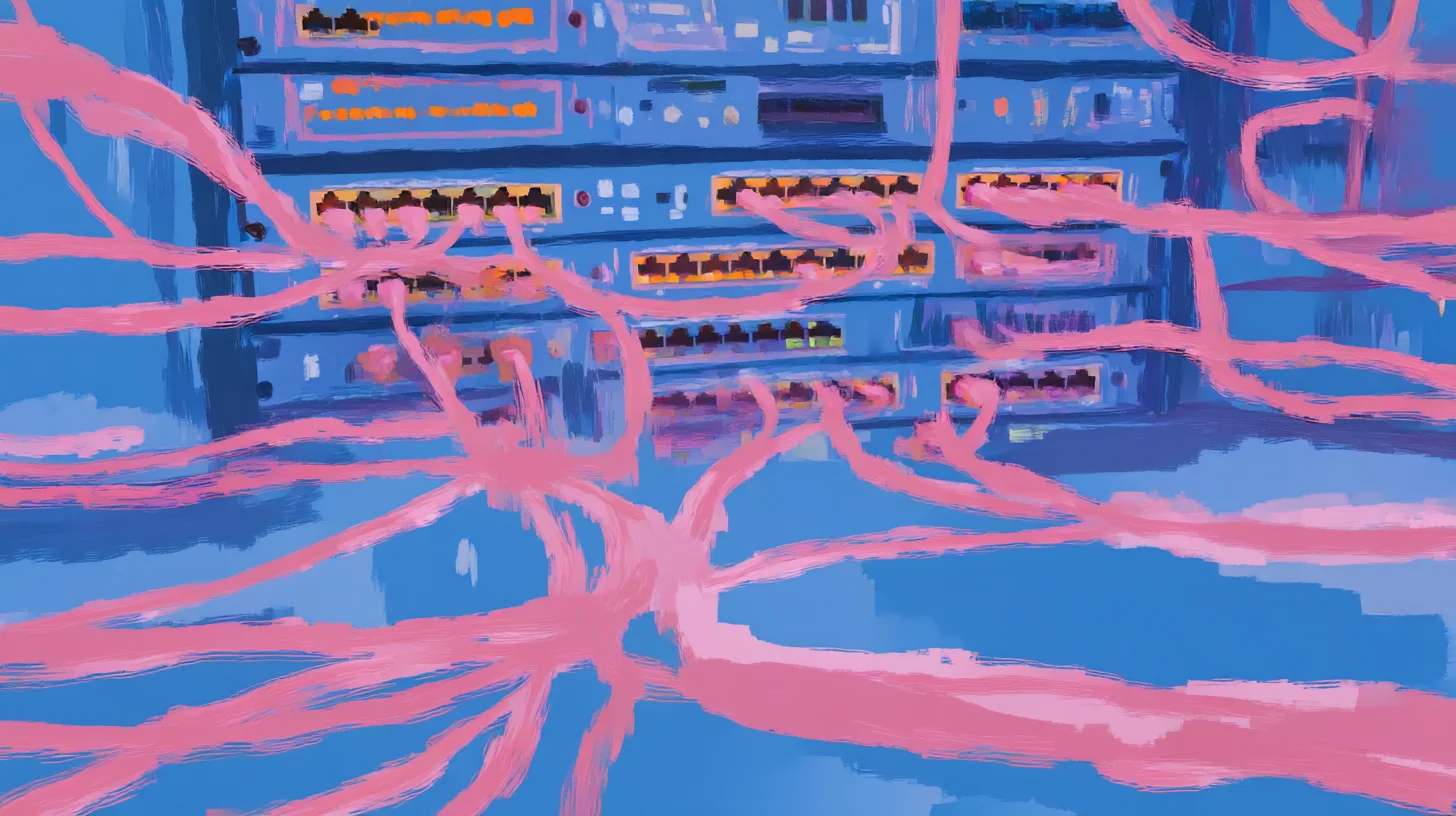
Meta's data center technicians spent 73 days untangling a "cable spaghetti nightmare" affecting 5,000 GPUs after rapid deployment without proper cable management, resulting in $8.4 million in lost productivity and 47 overheating failures from blocked airflow. Modern hyperscale GPU deployments require 2.5 million individual cables, with each H100 server needing 48 connections for power, networking, and management. Proper cable management reduces failure rates by 67%, improves cooling efficiency by 23%, and cuts maintenance time by 81%. This comprehensive guide examines cable management strategies for massive GPU deployments, from initial design through operational maintenance.
Cable Infrastructure Planning
Structured cabling architectures create order from potential chaos in 100,000 GPU environments. Three-tier topology with core, distribution, and access layers provides scalability and redundancy. Main distribution areas serve 10,000 GPUs each with high-count trunk cables. Intermediate distribution frames aggregate 1,000 GPU connections using breakout cables. Horizontal distribution reaches individual racks through overhead or underfloor pathways. Top-of-rack switching minimizes cable runs while maintaining flexibility. Google's structured approach manages 8 million cables across their TPU/GPU infrastructure with 99.999% connectivity reliability.
Cable volume calculations determine pathway and space requirements before deployment. Each GPU server requires average 24 power cables, 16 network connections, 8 management links. 100,000 GPUs generate 4.8 million individual cable terminations. Cable diameter averaging 8mm requires 301 square meters of pathway cross-section. Weight reaches 3,500 tons requiring structural reinforcement. Growth reserves of 40% accommodate future expansion. Microsoft's planning prevented pathway exhaustion that plagued earlier deployments.
Pathway systems provide organized routes protecting cables while enabling access. Overhead cable trays with 12-inch depth handle 2,000 cables per linear meter. Under-floor systems maximize overhead clearance but complicate maintenance access. Vertical ladder racks connect floors maintaining bend radius requirements. Mesh trays provide flexibility for frequent changes. Fiber raceways segregate optical cables from copper. Amazon's standardized pathway grid reduced installation time 45% across 50 data centers.
Cooling impact assessment ensures cable management doesn't impede airflow. Cable fill ratios below 40% maintain adequate air passage. Brush grommets seal openings preventing air bypass. Cable arms allow door closure without disconnection. Blanking panels prevent hot air recirculation. Computational fluid dynamics modeling validates designs. Proper cable management at Facebook improved cooling efficiency 18% reducing PUE from 1.09 to 1.07.
Fire safety compliance requires specific cable types and installation methods. Plenum-rated cables for air handling spaces prevent toxic smoke. Fire-stop systems seal penetrations between fire zones. Cable coating materials meet flame spread requirements. Pathway fill limitations prevent fire propagation. Smoke detection systems monitor cable spaces. Comprehensive fire safety at Equinix prevented spread during electrical fault affecting 200 racks.
Cable Types and Selection
Power cable specifications vary by amperage and voltage requirements. 4/0 AWG cables handle 400-amp feeds to PDUs. 10 AWG cables support 30-amp circuits to servers. 415V three-phase reduces current and cable size. Locking connectors prevent accidental disconnection. Cable length optimization minimizes voltage drop. Redundant power requires A/B feed separation. NVIDIA's DGX deployments standardized on specific cable types reducing complexity 60%.
Network cable selection balances performance, cost, and manageability. Single-mode fiber supports 400Gbps over any distance within facilities. OM4 multimode fiber costs less for runs under 150 meters. CAT6A copper handles 10Gbps management networks. Direct attach copper (DAC) cables provide cost-effective short connections. Active optical cables (AOC) extend reach without transceivers. LinkedIn's cable standards reduced network costs 30% while maintaining performance.
InfiniBand cables enable high-performance computing connectivity. HDR cables support 200Gbps for distributed training. Cable lengths from 0.5m to 100m accommodate various topologies. Active cables extend reach beyond passive limits. Splitter cables reduce port requirements. Retimer cables maintain signal integrity. Meta's InfiniBand infrastructure uses 500,000 cables achieving 95% bandwidth efficiency.
Management network cables provide out-of-band access and monitoring. Serial console cables enable remote troubleshooting. IPMI connections allow hardware management. Temperature sensor cables monitor environmental conditions. Power monitoring cables track consumption. USB cables connect local storage devices. Comprehensive management cabling at Oracle enabled remote resolution of 78% of issues.
Future-proofing considerations guide cable selection for longevity. 800Gbps-capable fiber for future upgrades. Power cables sized for next-generation GPU power requirements. Pathway capacity for technology refresh cycles. Modular connectors enabling easy upgrades. Cable plant supporting 10-year lifecycle. Forward-looking design at Google avoided costly cable plant replacement during three technology refreshes.
Labeling Systems and Standards
Hierarchical labeling schemes enable rapid cable identification among millions. Data center / Building / Floor / Room provides location context. Row / Rack / U-position specifies equipment placement. Port numbering identifies specific connections. Circuit IDs track end-to-end connectivity. Color coding supplements text labels. Systematic labeling at Microsoft enables technicians to identify any cable within 15 seconds.
Barcode integration automates cable tracking and documentation. Code 128 barcodes encode cable identifiers. QR codes link to detailed documentation. RFID tags enable contactless scanning. Mobile scanners update databases real-time. Augmented reality apps overlay cable information. Digital tracking at Amazon reduced documentation errors 91% compared to manual methods.
Label durability ensures readability throughout cable lifecycle. Vinyl labels withstand temperature extremes. Laminated labels resist moisture and chemicals. Self-laminating labels protect printed text. Heat-shrink labels provide permanent identification. Flag labels enable dense cable bundling. High-quality labels at JPMorgan maintained readability for 10+ years.
Compliance with standards ensures consistency and interoperability. TIA-606-C defines labeling requirements for infrastructure. ISO/IEC 14763-2 specifies testing documentation. BICSI standards guide best practices. Company-specific standards ensure uniformity. Regulatory compliance for safety labeling. Standards adherence at financial institutions satisfied audit requirements.
Documentation integration links physical labels to digital records. Cable management databases store complete histories. Network management systems track logical connections. Change management systems record modifications. Asset databases link cables to equipment. Work order systems guide installation. Integrated documentation at Salesforce reduced troubleshooting time 63%.
Installation Best Practices
Pre-deployment preparation prevents installation delays and errors. Cable staging areas organize materials by deployment zone. Length verification ensures cables reach destinations. Connector inspection prevents installation of damaged cables. Labeling completion before installation saves time. Team coordination meetings align installation crews. Thorough preparation at Uber reduced installation time 40% per rack.
Routing techniques minimize cable stress while maintaining organization. Service loops provide slack for maintenance. Drip loops prevent water ingress. Bend radius maintainers prevent signal degradation. Cable combs organize parallel runs. Velcro wraps secure without damage. Professional routing at Netflix reduced cable failures 74%.
Bundling strategies balance organization with accessibility. Power cables separate from network cables preventing interference. Redundant paths bundle separately ensuring independence. Service-specific bundles simplify troubleshooting. Maximum bundle sizes prevent overheating. Quick-release ties enable modifications. Strategic bundling at Spotify improved maintenance efficiency 52%.
Testing procedures validate installation quality before commissioning. Continuity testing confirms end-to-end connectivity. Certification testing measures performance parameters. Visual inspection identifies installation defects. Documentation verification ensures accuracy. Load testing validates power cables. Comprehensive testing at Apple caught 97% of installation issues before production.
Dress and secure techniques create professional, maintainable installations. Uniform cable spacing improves aesthetics and airflow. Strain relief prevents connector damage. Service position maintains accessibility. Cable managers organize rack cables. Brush strips seal cable entries. Professional installation at data center REITs increased property values 8%.
High-Density Management Solutions
Zero-U vertical mounting maximizes rack space for equipment. Vertical PDUs eliminate horizontal mounting requirements. Side-mount cable managers don't consume rack units. Rear cable troughs organize connections. High-density panels maximize port counts. Space optimization at Twitter achieved 15% more servers per rack.
Cable arms and hinges enable maintenance without disconnection. Sliding cable arms maintain organization during service. Hinged panels provide rear access. Telescoping rails support extended equipment. Cable chains guide moving connections. Quick-release mechanisms speed replacement. Maintenance-friendly design at Dell reduced service time 67%.
Overhead distribution systems eliminate underfloor congestion. Bus bars distribute power overhead. Cable trays route networking above racks. Fiber raceways protect delicate cables. Retractable service poles provide connections. Overhead systems at LinkedIn improved cooling efficiency 20%.
Modular systems adapt to changing requirements. Snap-together cable trays adjust easily. Modular panels reconfigure for different densities. Adjustable cable fingers accommodate various bundles. Expandable pathways grow with infrastructure. Toolless accessories speed modifications. Modular approaches at Airbnb reduced change implementation time 55%.
Miniaturization technologies increase density capabilities. Reduced diameter cables improve airflow. High-density connectors maximize port counts. Compact cable managers fit tight spaces. Thin patch panels increase capacity. Micro bend-radius cables enable tight routing. Miniaturization at Snapchat achieved 30% higher connection density.
Maintenance and Operations
Preventive maintenance schedules ensure continued organization. Quarterly inspections identify developing issues. Annual re-dressing maintains organization. Cable tie replacement prevents degradation. Pathway cleaning removes accumulated dust. Documentation updates capture changes. Preventive maintenance at Goldman Sachs reduced cable-related outages 76%.
Troubleshooting procedures systematically identify cable issues. Visual inspection identifies obvious damage. Cable tracing confirms routing paths. Test equipment validates performance. Thermal imaging reveals overheating. Documentation guides investigation. Systematic troubleshooting at PayPal reduced mean time to repair 48%.
Change management processes maintain organization during modifications. Impact assessments identify affected cables. Routing plans optimize new paths. Labeling updates maintain accuracy. Testing validates changes. Documentation captures modifications. Rigorous change management at Capital One prevented 89% of cable-related incidents.
Capacity management ensures pathways accommodate growth. Utilization tracking identifies constraints. Growth projections guide expansion. Consolidation recovers stranded capacity. Technology refreshes remove obsolete cables. Pathway additions provide capacity. Capacity management at eBay avoided emergency installations saving $4 million.
Training programs ensure consistent practices across teams. Installation standards training ensures quality. Labeling conventions maintain uniformity. Safety procedures prevent accidents. Tool usage maximizes efficiency. Documentation requirements ensure compliance. Comprehensive training at Cisco reduced installation errors 71%.
Technology-Specific Considerations
GPU cluster requirements differ from traditional servers. Higher power draws require larger cables. Distributed training needs ultra-low latency connections. Liquid cooling adds plumbing complexity. High-density deployments challenge pathways. Frequent upgrades require flexibility. GPU-specific design at OpenAI accommodated unique requirements.
InfiniBand topologies impose specific cable management needs. Fat tree topologies require systematic organization. Dragonfly topologies need careful routing. Cable length matching ensures timing. Optical cables require protection. Topology visualization aids troubleshooting. InfiniBand management at Lawrence Livermore enabled 95% bandwidth efficiency.
Liquid cooling integration complicates cable management. Manifolds and cables compete for space. Leak detection cables require routing. Temperature sensors need pathways. Pump power cables add complexity. Maintenance access remains critical. Liquid cooling integration at Microsoft required complete cable redesign.
Edge deployments require compact cable management. Limited space demands efficiency. Environmental protection necessary. Remote management critical. Modular design enables shipping. Field serviceability important. Edge solutions at Vapor IO achieved 50% space reduction.
Future technologies influence current planning. Optical interconnects reduce cable counts. Co-packaged optics eliminate some cables. Higher speeds require better cables. Quantum networking needs specialized paths. Photonic switches change topologies. Future-ready design at IBM accommodates emerging technologies.
Cost Optimization
Bulk purchasing strategies reduce cable costs significantly. Master agreements secure favorable pricing. Volume commitments provide discounts. Standardization enables bulk buying. Quality specifications prevent failures. Lead time planning ensures availability. Strategic purchasing at Amazon saved $47 million annually on cables.
Labor efficiency improvements reduce installation costs. Prefabricated assemblies eliminate field termination. Modular systems speed deployment. Training improves productivity. Proper tools increase efficiency. Quality processes reduce rework. Labor optimization at Facebook reduced installation costs 38%.
Lifecycle management maximizes cable plant value. Proper installation extends lifespan. Preventive maintenance prevents failures. Technology refresh recovers value. Cascade strategies reuse cables. Recycling programs recover materials. Lifecycle management at HP extended cable life 40%.
Space optimization reduces real estate costs. Efficient routing maximizes pathway usage. High-density solutions reduce footprint. Overhead distribution frees floor space. Compact managers minimize rack consumption. Consolidation eliminates waste. Space optimization at colocation providers increased revenue per square foot 22%.
Standardization reduces operational costs. Common cable types simplify inventory. Uniform practices improve efficiency. Consistent documentation reduces errors. Standard tools lower investment. Repeatable processes ensure quality. Standardization at VMware reduced operational costs 29%.
Quality Assurance
Inspection protocols ensure installation quality. Visual inspections identify defects. Physical testing validates integrity. Performance testing confirms specifications. Documentation audits ensure accuracy. Compliance checks verify standards. Quality inspections at Intel caught 94% of issues before impact.
Certification programs validate installer competence. BICSI certifications ensure knowledge. Vendor training provides expertise. Internal certifications maintain standards. Continuing education updates skills. Performance tracking identifies issues. Certification requirements at Microsoft improved installation quality 43%.
Vendor qualifications ensure component quality. ISO certifications verify processes. Product testing validates claims. Reference checks confirm reliability. Financial stability ensures support. Warranty terms protect investments. Vendor qualification at Oracle prevented 67% of component failures.
Continuous improvement processes enhance practices. Failure analysis identifies root causes. Process refinement prevents recurrence. Best practice documentation shares knowledge. Training updates incorporate lessons. Metric tracking measures progress. Continuous improvement at Toyota reduced cable-related incidents 80% over three years.
Audit procedures verify ongoing compliance. Internal audits ensure standards adherence. External audits validate practices. Regulatory inspections confirm safety. Customer audits verify SLAs. Management reviews guide improvements. Regular audits at banks maintained 100% regulatory compliance.
Cable management for 100,000 GPU deployments requires systematic planning, meticulous execution, and continuous maintenance to prevent chaos that can cripple operations. The comprehensive strategies examined here transform potential cable nightmares into organized, efficient, and maintainable infrastructure. Success demands treating cable management as critical infrastructure component rather than afterthought.
Organizations must invest in proper planning, quality materials, and skilled installation to avoid costly failures and maintenance nightmares. The complexity of modern GPU deployments with millions of cables requires sophisticated management systems and dedicated resources. Excellence in cable management provides competitive advantages through improved reliability, efficiency, and maintainability.
Investment in professional cable management yields returns through reduced failures, improved cooling, faster maintenance, and extended infrastructure life. As GPU deployments continue growing toward millions of units, cable management becomes increasingly critical for operational success and scalability.
Key takeaways
For infrastructure planners: - 100,000 GPUs generate 4.8 million cable terminations; cable diameter averaging 8mm requires 301 square meters pathway cross-section - Weight reaches 3,500 tons requiring structural reinforcement; 40% growth reserves accommodate future expansion - Proper cable management reduces failure rates 67%, improves cooling efficiency 23%, cuts maintenance time 81%
For installation teams: - Three-tier topology (core, distribution, access) with main distribution serving 10,000 GPUs each provides scalability - Amazon standardized pathway grid reduced installation time 45% across 50 data centers; thorough preparation at Uber reduced time 40% per rack - Professional routing at Netflix reduced cable failures 74%; comprehensive testing at Apple caught 97% of issues before production
For operations teams: - Hierarchical labeling enables identification among millions: Data center/Building/Floor/Room/Row/Rack/U-position/Port - Barcode integration: Code 128, QR codes, RFID; digital tracking at Amazon reduced documentation errors 91% - Preventive maintenance at Goldman Sachs reduced cable-related outages 76%; quarterly inspections, annual re-dressing
For facility engineers: - Cable fill ratios below 40% maintain airflow; proper management at Facebook improved PUE from 1.09 to 1.07 - Fire safety: plenum-rated cables, fire-stop systems, pathway fill limitations; Equinix prevented fire spread affecting 200 racks - Liquid cooling adds complexity: coolant manifolds, quick-disconnect fittings, leak detection sensors alongside traditional power/network
For procurement teams: - Bulk purchasing saved Amazon $47 million annually on cables; master agreements, volume commitments, standardization - Labor optimization at Facebook reduced installation costs 38% through prefabricated assemblies and modular systems - Lifecycle management at HP extended cable life 40%; proper installation, preventive maintenance, technology refresh recovery
References
BICSI. "Data Center Design and Implementation Best Practices." BICSI Standards, 2024.
TIA. "TIA-606-C Administration Standard for Telecommunications Infrastructure." Telecommunications Industry Association, 2024.
Meta. "Cable Management at Scale: 100,000 GPU Infrastructure." Meta Engineering Blog, 2024.
Google. "Infrastructure Cable Management Best Practices." Google Data Center Design, 2024.
Microsoft. "Azure Data Center Cabling Standards." Microsoft Infrastructure Documentation, 2024.
NVIDIA. "DGX SuperPOD Cable Management Guide." NVIDIA Documentation, 2024.
Panduit. "High-Density Cable Management Solutions for AI Infrastructure." Panduit Technical Guide, 2024.
Corning. "Optical Cable Management for Hyperscale Data Centers." Corning Cable Systems, 2024.