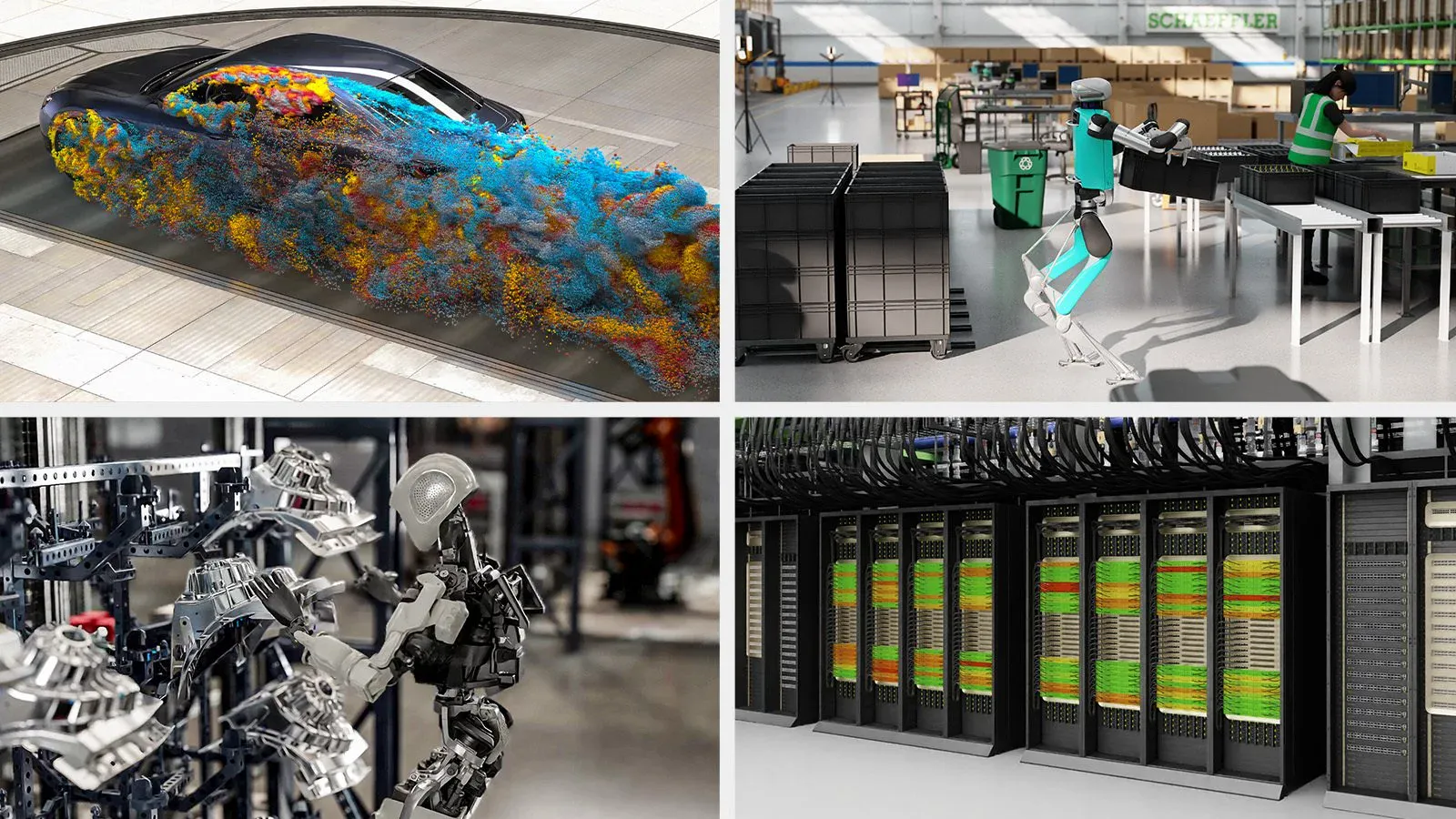
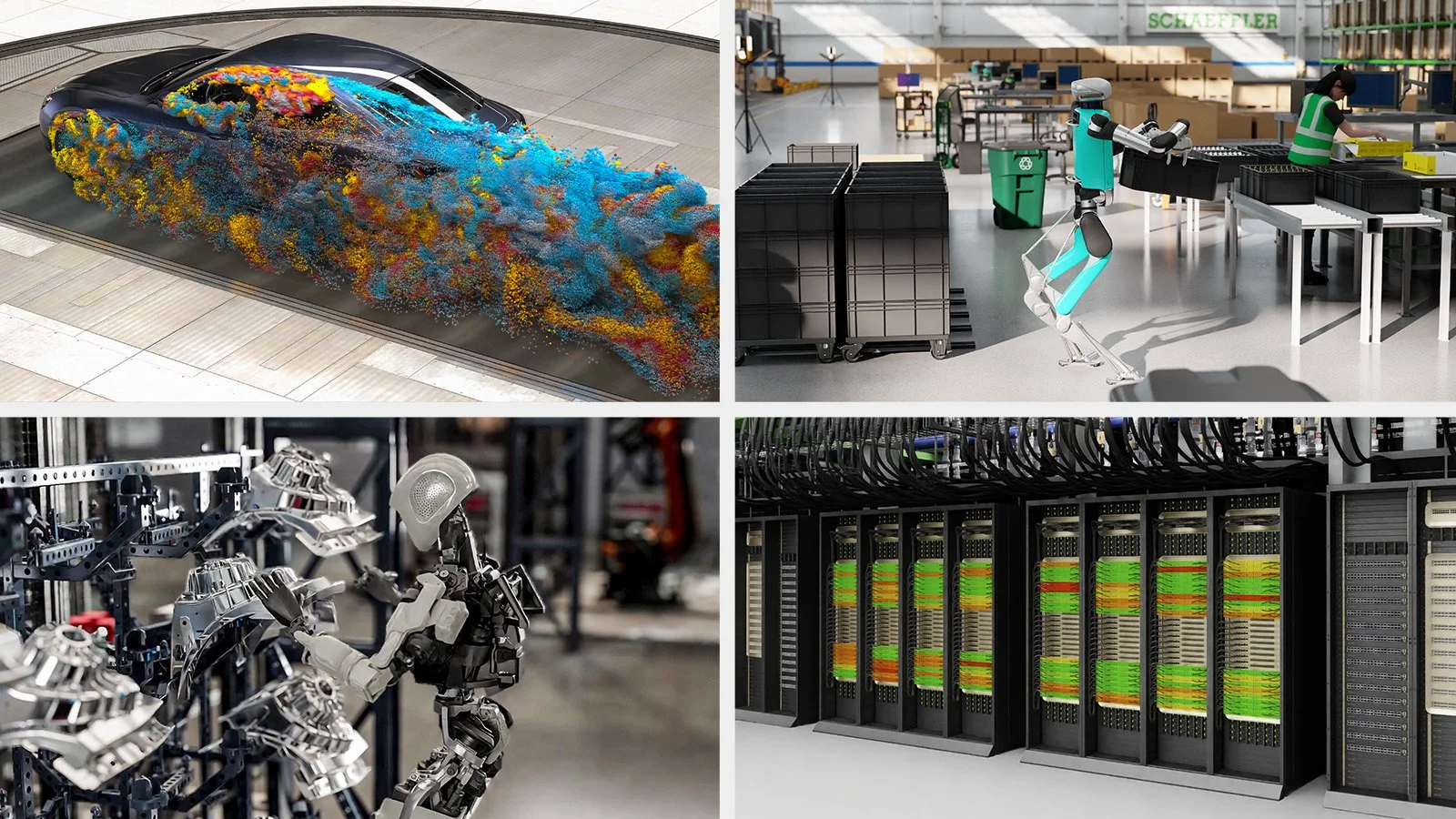
NVIDIA Omniverse has evolved from a collaborative 3D platform into a comprehensive operating system for physical AI and industrial digital twins, with over 300,000 downloads and 252+ enterprise deployments across manufacturing, automotive, robotics, and media industries as of August 2025.¹ The platform's modular architecture, built on Universal Scene Description (OpenUSD) and powered by RTX technology, enables real-time collaboration, physics-accurate simulation, and AI-powered synthetic data generation at an industrial scale. Major enterprises, including BMW, Amazon, General Motors, and Siemens, have achieved quantifiable ROI through reduced planning time, cost savings exceeding millions of dollars, and efficiency gains of 30-70% across various workflows.² With the recent launch of Omniverse Cloud APIs, integration with Cosmos World Foundation Models, and positioning as the foundation for the $50 trillion physical AI opportunity, NVIDIA has established Omniverse as the de facto standard for industrial digitalization and autonomous system development.³
[caption id="" align="alignnone" width="1600"]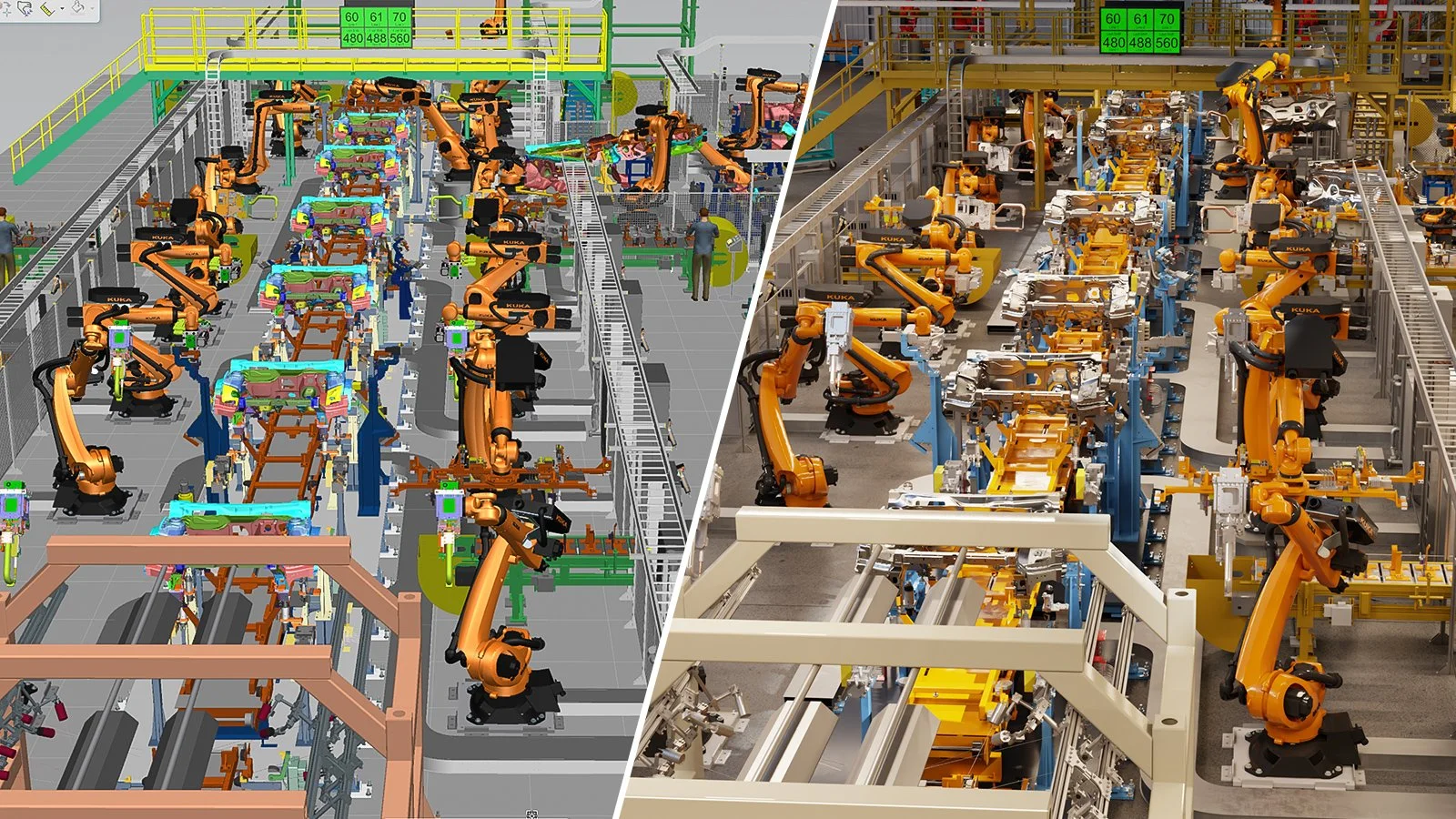 Siemens Teamcenter integration with NVIDIA Omniverse creating photorealistic digital twins for manufacturing optimization. This partnership exemplifies the platform's 82+ third-party application ecosystem, enabling seamless workflows between CAD, simulation, and visualization tools. [/caption]
## How Omniverse works: Architecture meets intelligence
[caption id="" align="alignnone" width="1600"]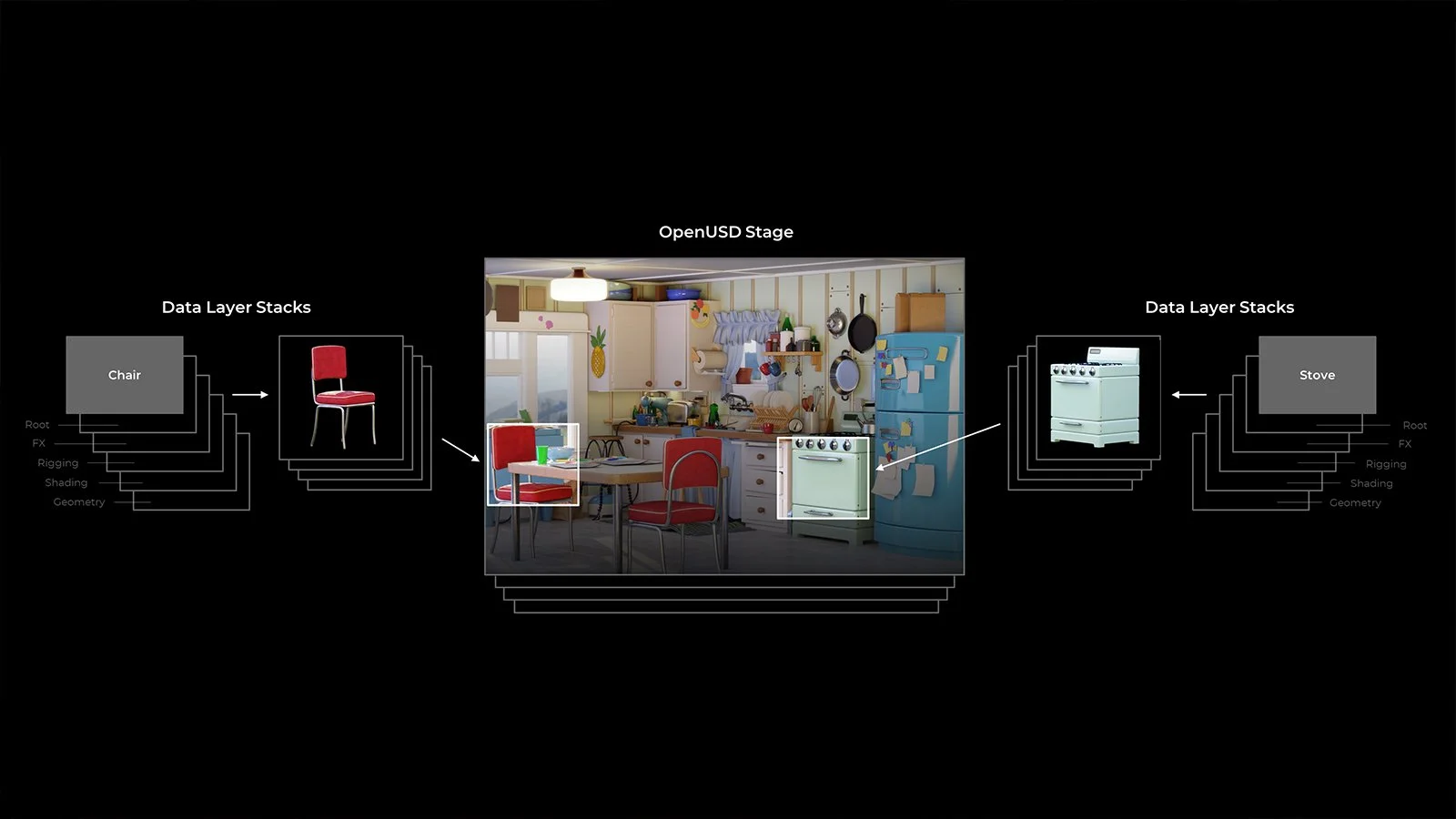 The OpenUSD (Universal Scene Description) foundation powering NVIDIA Omniverse's modular architecture, enabling seamless data exchange across 50+ 3D formats and applications. This core technology stack combines real-time RTX rendering, PhysX physics simulation, and AI services to create the industry's first native OpenUSD platform [/caption]
NVIDIA Omniverse operates on a modular microservices architecture built upon three foundational pillars that enable unprecedented industrial-scale collaboration and simulation capabilities. At its core, the platform leverages OpenUSD (Universal Scene Description) as the fundamental data interoperability framework, enabling seamless exchange of 3D content across over 50 different formats and applications.⁴ The NVIDIA RTX rendering engine provides real-time ray tracing and path tracing capabilities that deliver photorealistic visualization, while a sophisticated microservices framework ensures scalable, interchangeable building blocks for custom application development.⁵
The Omniverse Kit SDK serves as the central toolkit for building applications, microservices, or plugins, capable of running either headless as a microservice or with a fully customizable UI. This flexibility allows developers to create specialized tools tailored to specific industry needs while maintaining compatibility with the broader ecosystem.⁶ Omniverse Nucleus, the platform's database and collaboration engine, enables multiple users to connect live across different client applications simultaneously, managing version control, authentication, and optimized large file transfers through its hierarchical, tree-like file structure.⁷
The platform's physics simulation capabilities, powered by the NVIDIA PhysX SDK, deliver comprehensive rigid body dynamics, fluid simulation through PhysX Flow, and destruction modeling via PhysX Blast. These systems support everything from basic collision detection to advanced soft body physics and vehicle dynamics, with configurable CPU/GPU execution for performance optimization.⁸ The integration extends to AI-powered features through Omniverse Replicator, which serves as a synthetic data generation engine creating physically accurate 3D datasets for training perception networks in autonomous vehicles, robotics, and computer vision applications.⁹
Infrastructure requirements scale from individual workstations with RTX 3060 GPUs and 16GB RAM for basic usage to enterprise deployments supporting up to 16 GPUs per system with 48GB+ VRAM each. The platform supports Windows 10/11 and Ubuntu 20.04+ Linux distributions, with container deployment options and cloud streaming capabilities across major providers including AWS, Azure, and Google Cloud.¹⁰ This technical foundation enables Omniverse to serve as what Jensen Huang calls "the operating system for building and operating physically realistic digital twins."¹¹
Industries transformed: From pixels to production lines.
[caption id="" align="alignnone" width="1600"]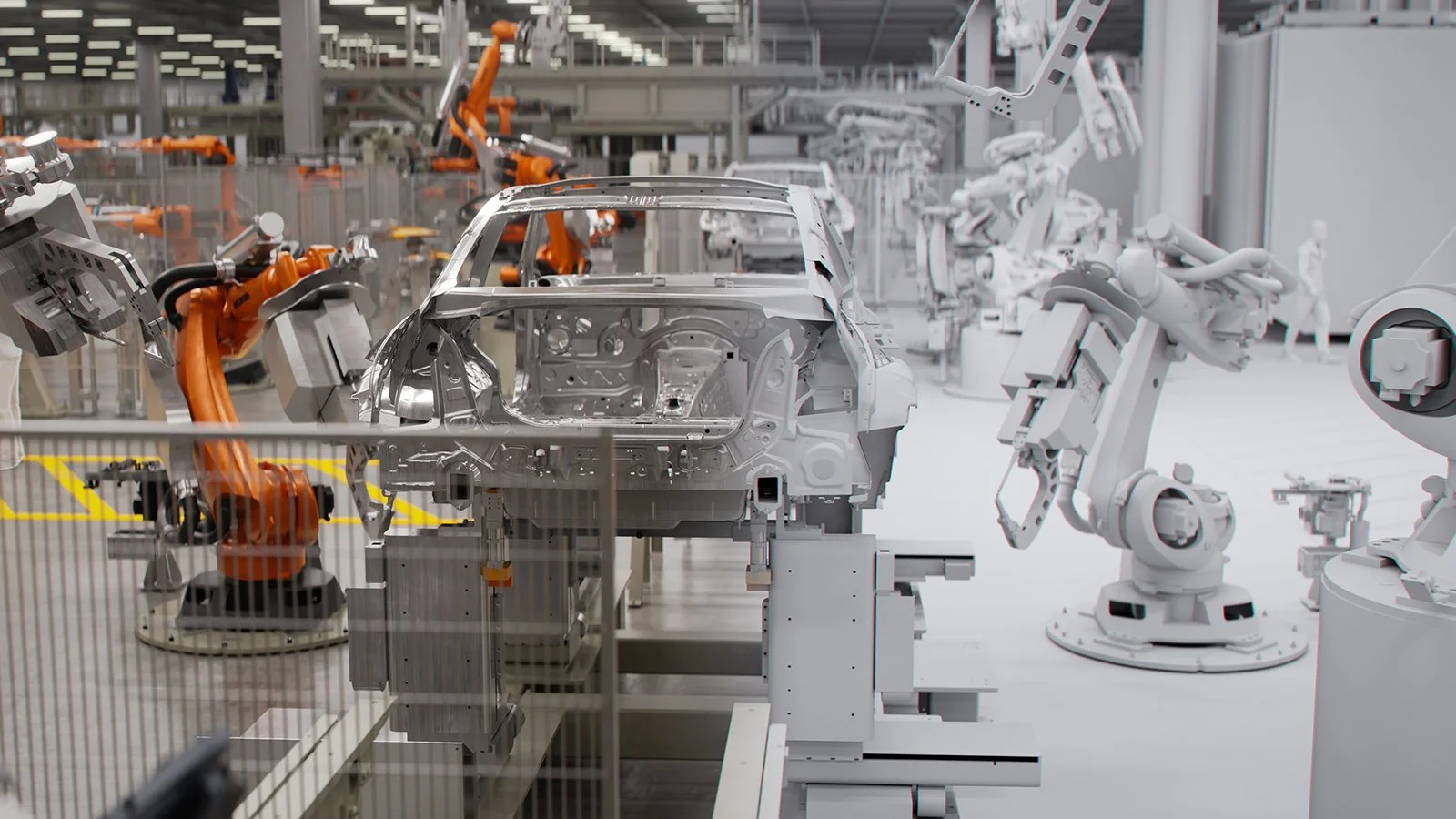 BMW Group's digital twin factory visualization in NVIDIA Omniverse, representing one of 31 global facilities spanning 1 million square meters. The automaker achieved 30% more efficient planning processes and hundreds of thousands of dollars in savings through real-time collaboration, managing production of 2.5 million customized vehicles annually. [/caption]
Manufacturing leads Omniverse adoption with BMW Group's groundbreaking implementation across all 31 global factories, simulating facilities spanning 1 million square meters—equivalent to 140 football fields. The automaker reports 30% more efficient planning processes and cost savings of hundreds of thousands of dollars in factory reconfiguration through real-time collaboration using their custom FactoryExplorer platform.¹² BMW manages production of 2.5 million vehicles annually with 99% customization, all coordinated through Omniverse digital twins that enable simultaneous design changes, visualization, and parallel design reviews.¹³
[caption id="" align="alignnone" width="1600"] WPP's digital twin implementation showcasing Omniverse capabilities for marketing and creative workflows. The platform's real-time ray tracing and collaborative features transform content creation timelines from weeks to hours, as demonstrated by similar implementations achieving 70% time reductions. [/caption]
In the automotive sector, Nissan and Katana Studio's COATcreate platform demonstrates the transformative power of real-time marketing content creation. Across 10 campaigns generating 800+ marketing images for global markets, the partnership achieved over $1.1 million in production cost savings with a 70% reduction in asset creation timelines—condensing workflows from weeks to hours.¹⁴ The platform's cloud-based SaaS architecture with RTX-powered real-time ray tracing has fundamentally changed how automotive companies approach visual content creation, with Nissan's Chad Taylor noting that "OpenUSD is no longer a future vision—it's our current workflow."¹⁵
[caption id="" align="alignnone" width="1600"]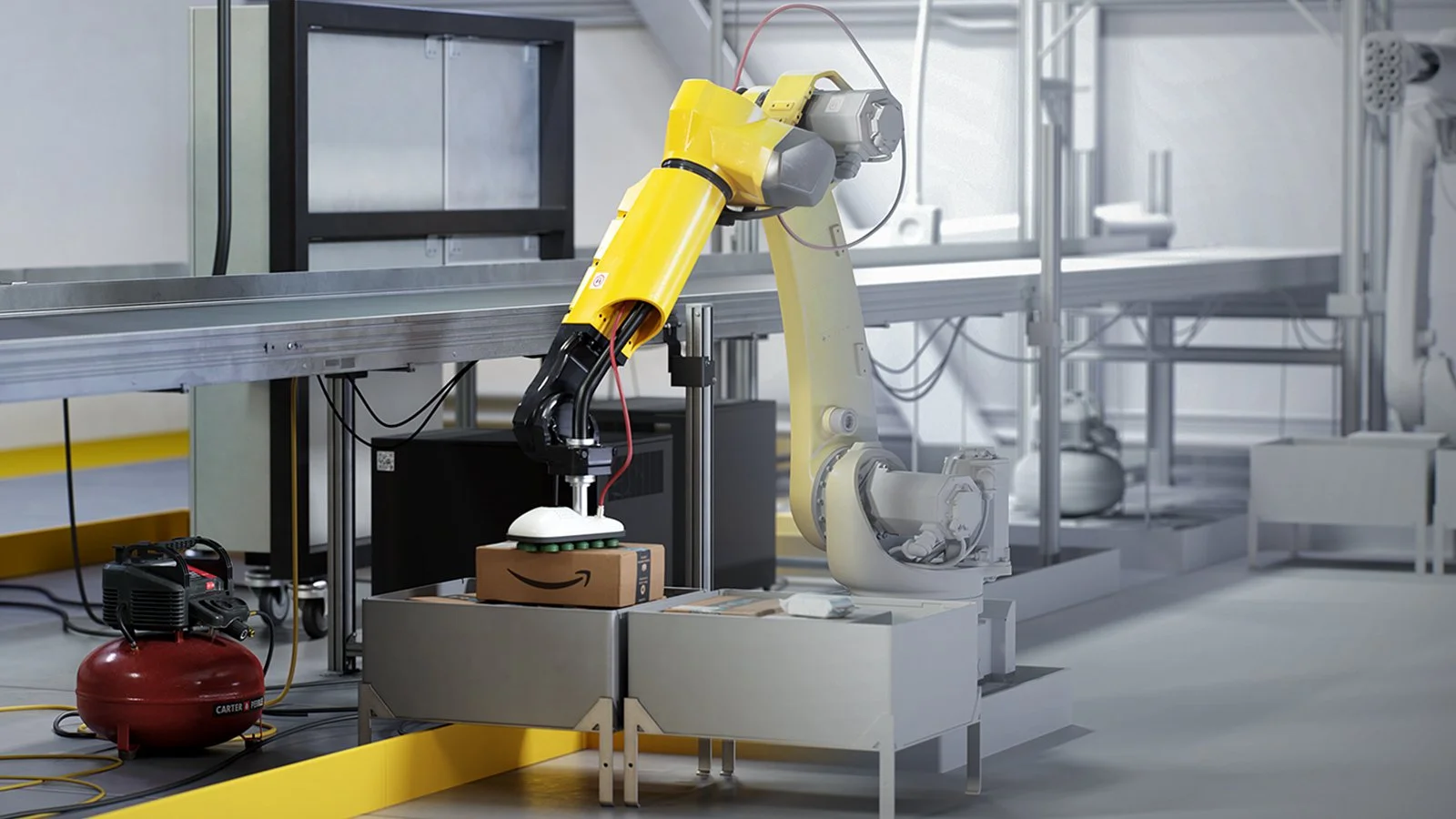 Amazon Robotics' AI-enabled digital twin optimizing operations across 200+ fulfillment centers with over 500,000 mobile robots. The Omniverse implementation enhances warehouse design, robot training through synthetic data generation, and fleet coordination managing tens of millions of daily package deliveries. [/caption]
Robotics applications showcase perhaps the most impressive scale, with Amazon Robotics leveraging Omniverse to optimize operations across 200+ fulfillment centers, managing tens of millions of packages daily with over 500,000 mobile robots. The company uses AI-enabled digital twins for warehouse design optimization, robot training through synthetic data generation, and fleet coordination, which has significantly enhanced productivity.¹⁶ The integration of Substance 3D with Isaac Sim enables perception model training that improves robot intelligence while optimizing warehouse layouts for maximum efficiency.
[caption id="" align="alignnone" width="1600"]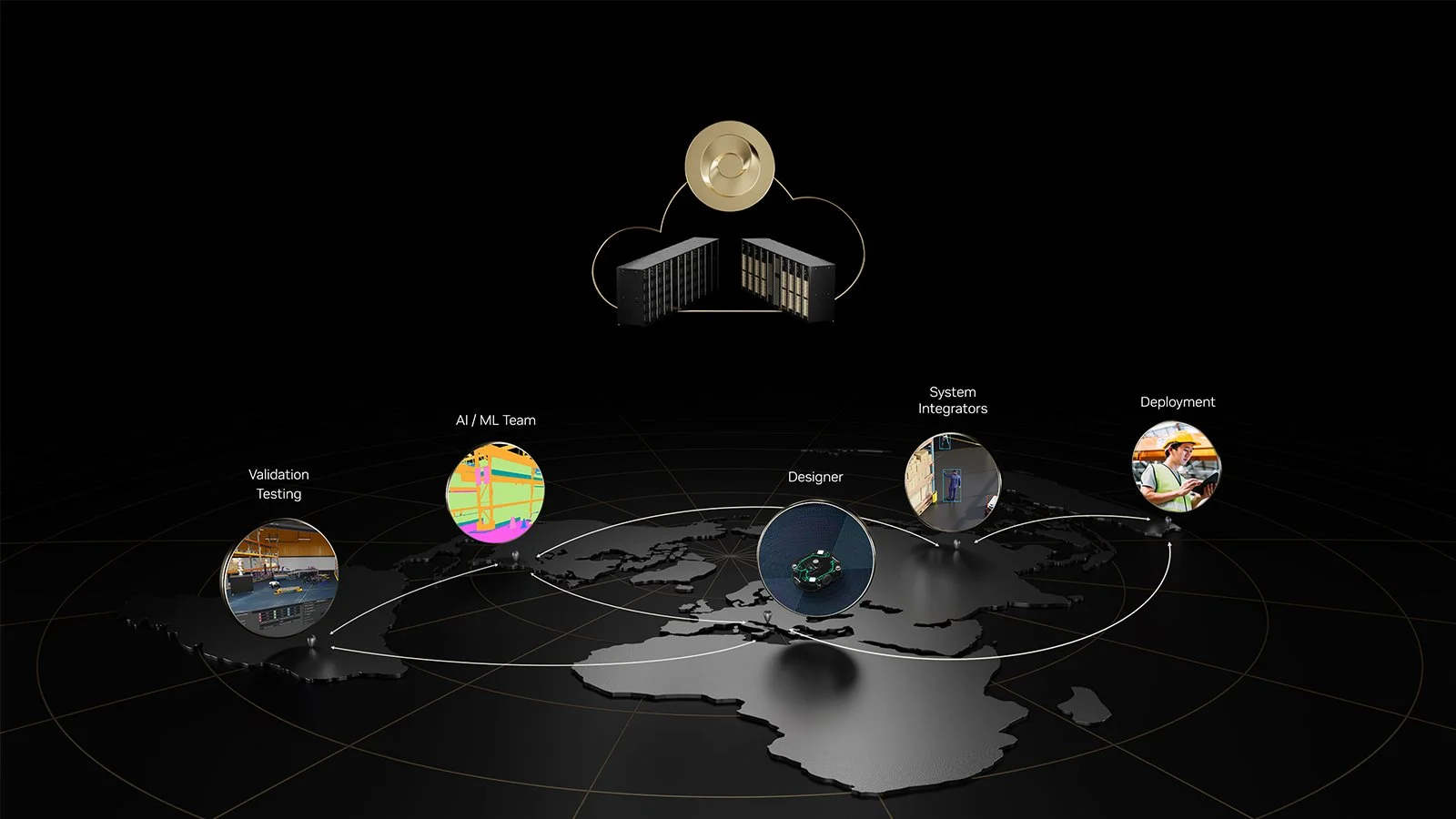 Isaac Sim running on Omniverse Cloud for scalable robotics simulation and training. The integration enables synthetic data generation, ROS compatibility, and AI model training for autonomous systems—supporting deployments from warehouse AMRs to humanoid robots. [/caption]
Architecture firms like Foster + Partners have transformed their global collaboration capabilities, with 17 offices across 14 countries now working simultaneously in real-time on complex building designs. The firm reports significant reductions in model processing time and enhanced creative design time allocation through Omniverse Enterprise's integrated BIM workflows.¹⁷ Similarly, OutdoorLiving3D reduced production time by 1,000 hours annually while cutting rendering times from 72+ hours to under 1.5 hours, demonstrating the platform's impact on architectural visualization workflows.¹⁸
The media and entertainment industry has embraced Omniverse for virtual production, with Versatile Media completing the "New Air" sci-fi short film in just 9 days using only three physical props. The production achieved principal photography in 4 days and post-production in 1 day, winning Best VFX Narrative Short Film at the 2022 Spark Animation Festival.¹⁹ This represents a paradigm shift in content creation, where real-time compositing eliminates traditional post-production VFX requirements.
Platform evolution: From collaboration to Cosmos
The transformation of NVIDIA Omniverse throughout 2024-2025 marks a strategic pivot from collaborative platform to comprehensive operating system for physical AI. March 2024's GTC announcement of Omniverse Cloud APIs represented the foundational shift, introducing five new APIs—USD Render, Write, Query, Notify, and Omniverse Channel—that opened the platform to the broader software ecosystem.²⁰ Major enterprises immediately adopted these capabilities, with Siemens integrating Teamcenter X for photorealistic digital twins, Ansys applying them to autonomous vehicle simulation, and Microsoft, Rockwell Automation, Trimble, and Hexagon implementing various digital twin solutions.²¹
The integration with Apple Vision Pro announced in March 2024 demonstrated NVIDIA's commitment to spatial computing, enabling immersive viewing of industrial digital twins through "hybrid rendering" that combines local and cloud processing. The Graphics Delivery Network supports streaming to Vision Pro across 130+ countries, maintaining high-fidelity visualization without compromising massive engineering datasets—a critical capability for enterprise adoption.²²
SIGGRAPH 2024 brought generative AI integration throughout the Omniverse ecosystem, with DLSS 3 integration for Ada Lovelace architecture, real-time 4K path tracing of industrial scenes, and native XR capabilities.²³ The platform's modular architecture expanded to include 600+ core extensions, while ecosystem partnerships grew to encompass Adobe Firefly APIs, Wonder Dynamics, Convai, and SideFX Houdini, creating an unprecedented creative technology stack.²⁴
CES 2025 marked NVIDIA's positioning of Omniverse as the foundation for "generative physical AI," introducing USD Code and USD Search NIMs for text-to-3D asset generation, Edify SimReady for automated 3D asset labeling that reduces 40+ hours of manual work to minutes, and four new blueprints for robot fleets, autonomous vehicles, spatial streaming, and real-time CAE.²⁵ Major adoptions by Accenture with KION for autonomous warehouses and General Motors for factory enhancement validated the platform's enterprise readiness.²⁶
By GTC 2025, Jensen Huang positioned Omniverse as the operating system for AI factories and the "$50 trillion physical AI opportunity." The demonstration of using Omniverse to design and optimize 1-gigawatt AI data centers before physical construction, integrating the Cadence Reality Digital Twin platform with advanced cooling systems and network topology optimization, showcased the platform's evolution into critical infrastructure for the AI era.²⁷ The deep integration with NVIDIA Cosmos world foundation models enables physics-based world generation, synthetic data creation, and digital twin conditioning at unprecedented scale.²⁸
World Foundation Models revolutionize AV safety.
The WFM autonomous vehicle simulation case study reveals how NVIDIA's Cosmos platform, featuring World Foundation Models (neural networks that understand physics and real-world properties), is transforming autonomous vehicle development and safety validation. These models, trained on 20 million hours of robotics and driving data comprising nine quadrillion tokens, generate synthetic datasets that dramatically expand training capabilities beyond what's possible with real-world data collection alone.²⁹
Cosmos Predict-2 generates up to 30 seconds of continuous video predicting future world states from multimodal inputs, with variants optimized for either speed (2B model) or high-fidelity outputs (14B model). The technology's ability to transform single-view dashcam footage into multi-view videos significantly expands available training datasets.³⁰ Cosmos Transfer adds critical variations in weather, lighting, and terrain to existing scenarios, with integration planned for CARLA's 150,000 developers, while Cosmos Reason uses chain-of-thought reasoning to evaluate synthetic visuals and improve data annotation quality.³¹
Major autonomous vehicle organizations have rapidly adopted these capabilities. Foretellix integrates Cosmos Transfer for enhanced behavioral scenarios with weather and lighting variations, enabling high-fidelity sensor simulation for end-to-end validation.³² Mcity is building a digital twin of its 32-acre proving ground using the AV simulation blueprint, addressing sim-to-real gap challenges through physics-based modeling of camera, lidar, radar, and ultrasonic sensor data.³³ Plus AI post-trains Cosmos Predict on trucking data for autonomous trucking solutions, while Uber partners with NVIDIA to accelerate autonomous mobility development.³⁴
The quantifiable improvements are substantial: the NVIDIA Physical AI Dataset includes 40,000 clips generated using Cosmos, with processing efficiency delivering 12x faster tokenization than state-of-the-art methods and 8x more total compression. Video quality shows +4 dB PSNR improvement in reconstruction quality. Perhaps most impressively, 20 million hours of data can be processed in just 40 days on NVIDIA Hopper GPUs—a task that would require over 3 years on unoptimized CPU systems.³⁵
Safety validation processes benefit from the NVIDIA Halos platform enhancement, enabling diverse scenario creation, including rare and dangerous situations impossible to test safely in the real world. The closed-loop testing capability allows full interaction between the AV stack and simulated world, while physics-based simulation ensures realistic sensor behavior across diverse environmental conditions.³⁶ This comprehensive approach to safety testing, recognized by CVPR as the Autonomous Grand Challenge winner for two consecutive years, establishes new standards for AV development and validation.³⁷
Strategic roadmap targets industrial AI transformation
NVIDIA's vision positions Omniverse as the operating system for physical AI, targeting the $50 trillion manufacturing and logistics markets. The 2025 Blackwell Ultra release delivers 1.5x performance improvements with 288GB HBM3E memory, followed by the 2026 Vera Rubin platform offering 3.3x performance gains through dual-GPU R100 designs with 50 petaflops FP4 performance.
The 2027 Rubin Ultra architecture promises 14x performance over Blackwell Ultra, featuring 576 GPUs per rack in VR300 NVL576 configurations. Each GPU socket delivers 100 petaflops FP4 performance with 1TB HBM4E memory, enabling 15 exaflops inference and five exaflops training per rack - a 21x improvement over current GB200 systems.
Digital twin implementations demonstrate immediate value. Foxconn's Fii platform achieves 150x faster thermal simulations using Cadence integration, while BMW enables years-ahead factory planning before physical construction. TSMC transforms 2D layouts to 3D facility models in seconds, using cuOpt optimization for multilevel piping system generation. Delta Electronics reports 100x acceleration in computer vision training with 90% object detection accuracy.
The industrial metaverse strategy encompasses three stages: world building in Omniverse, physics labeling for realistic behaviors, and photorealistic rendering indistinguishable from reality. GR00T foundation models enable humanoid robotics development, while the Mega Blueprint coordinates fleets of AMRs, manipulators, and humanoid robots through unified scheduling systems.
Technical requirements scale with ambition
[caption id="" align="alignnone" width="1600"]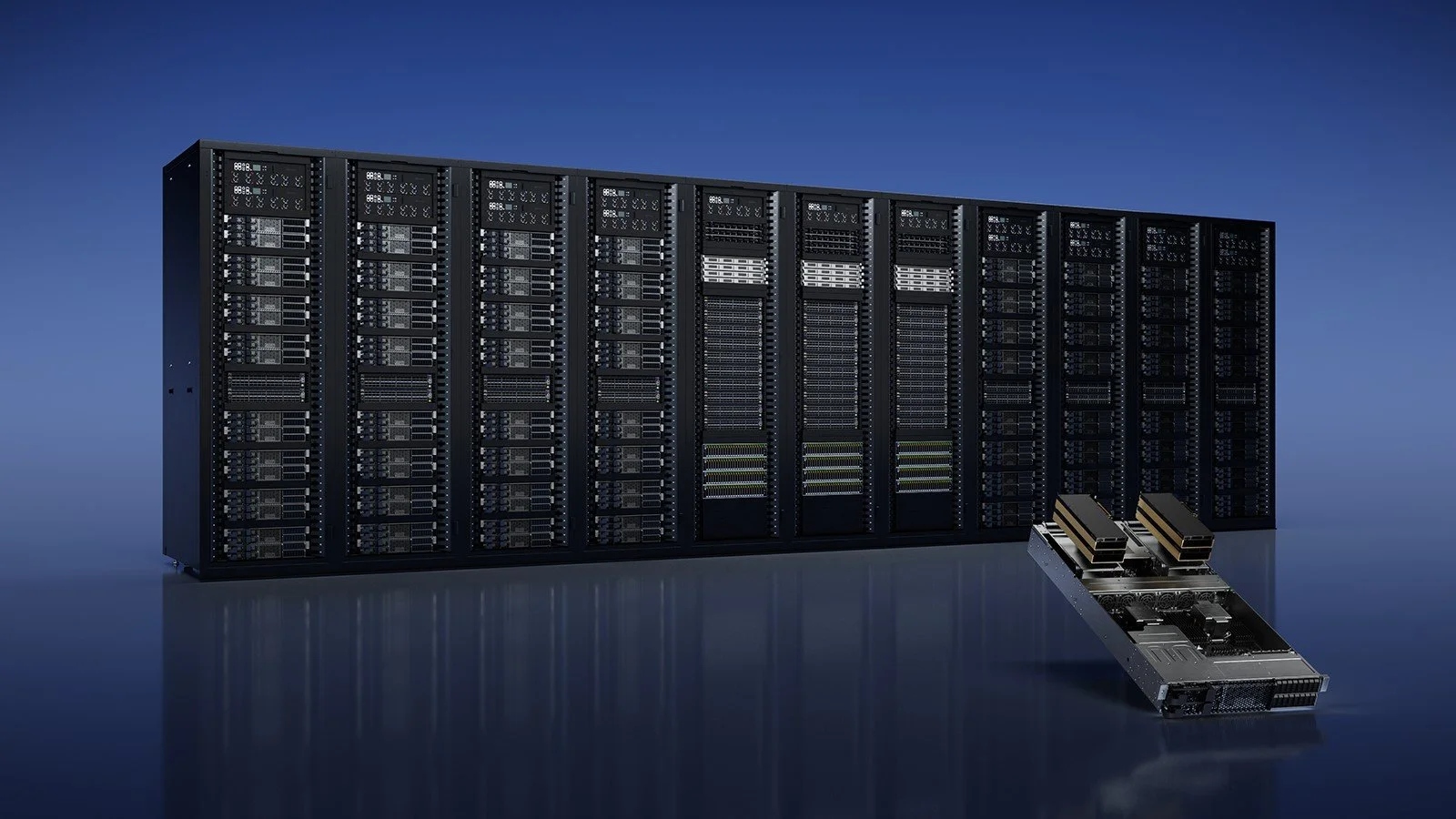 NVIDIA OVX systems powering enterprise Omniverse deployments with configurations scaling up to 16 GPUs per system. These purpose-built systems support the platform's demanding requirements: RTX rendering, physics simulation, and AI workloads for industrial digital twins. [/caption]
Organizations considering Omniverse deployment must carefully evaluate technical requirements that scale dramatically based on use case complexity. GPU specifications range from a minimum NVIDIA RTX 3060 with 12GB VRAM for basic usage to enterprise configurations with RTX A6000 or newer GPUs featuring 48GB+ VRAM per unit.³⁸ Professional workstations typically require RTX 4080/4090 GPUs with 24-48GB VRAM, while data center deployments can scale up to 16 GPUs per system for maximum performance, with the platform supporting mixed-GPU configurations with some limitations.³⁹
CPU and memory requirements start at 8-core Intel/AMD processors with 16GB RAM for basic usage, but quickly escalate to 16+ core CPUs with 64GB+ RAM for professional workflows. Advanced use cases, particularly those involving XR applications and large scene handling, demand 128GB+ of high-speed DDR5 memory.⁴⁰ Storage needs begin at 250GB of available SSD space but scale to multiple terabytes of NVMe storage for complex projects, with network-attached storage support essential for collaborative workflows.⁴¹
Network infrastructure proves critical for real-time collaboration, with low-latency connections essential and cross-availability zone traffic adding both latency and costs in cloud deployments. Enterprise deployments must consider that Nucleus server placement should minimize distance to client systems—VMware deployment studies showed 12.05% lower latency with optimized configurations.⁴² High-speed internet enables cloud streaming features, while enterprise networking supports multi-user environments with SSL/TLS security.
[caption id="" align="alignnone" width="1600"]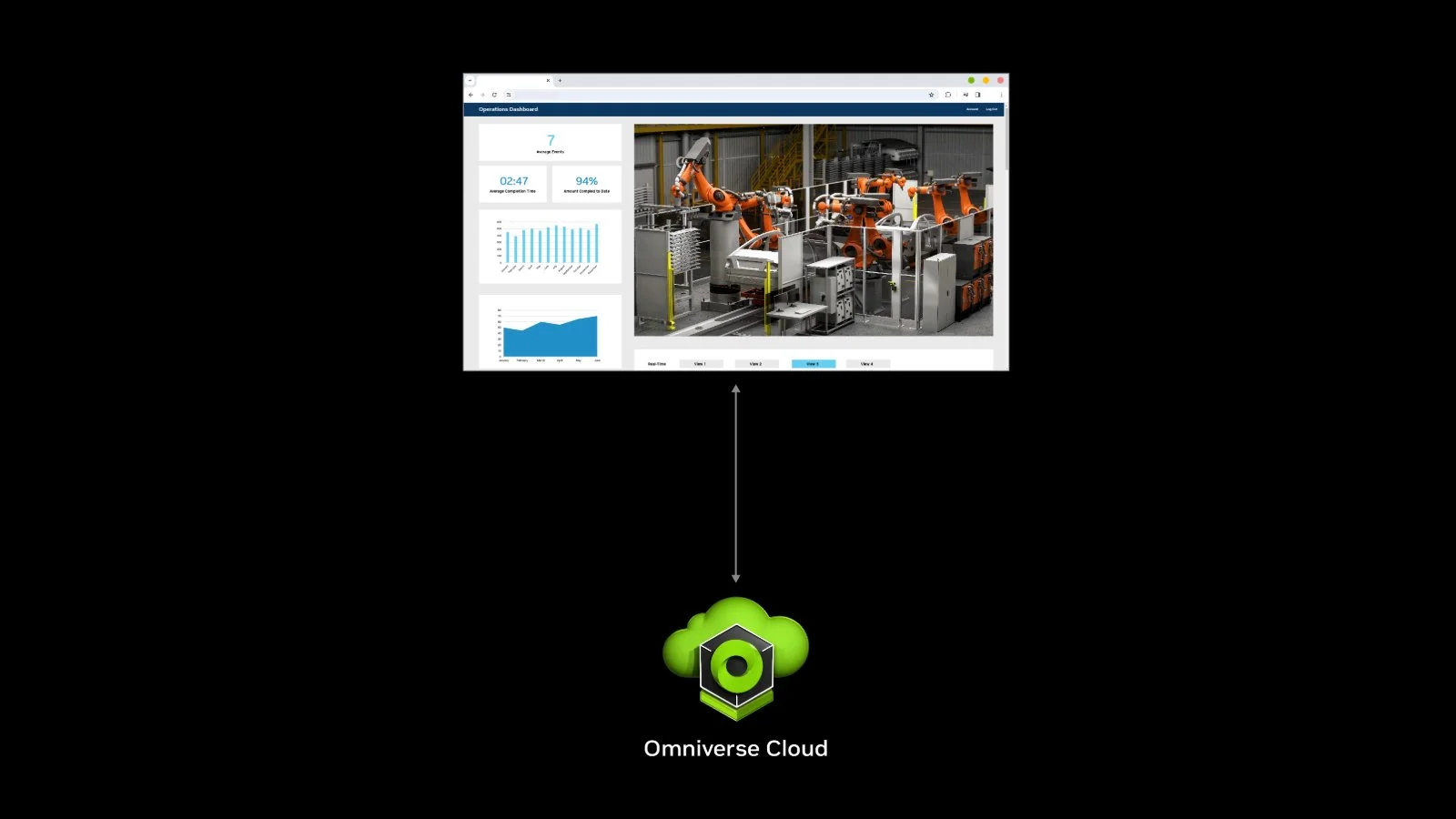 NVIDIA Omniverse Cloud architecture supporting enterprise deployments across AWS, Azure, and Google Cloud platforms. The five Cloud APIs launched in 2024—USD Render, Write, Query, Notify, and Channel—enable programmatic 3D scene manipulation and distributed team collaboration. [/caption]
Cloud deployment options span major providers, with NVIDIA Omniverse on DGX Cloud offering a fully managed platform, AWS EC2 G6e instances with L40S GPUs providing scalable infrastructure, and Microsoft Azure featuring preconfigured Omniverse images on A10 GPU instances.⁴³ On-premise requirements center on NVIDIA RTX professional workstations and servers, with VMware vSphere virtualization support and Enterprise Nucleus Server for collaboration. NVIDIA-Certified Systems from partners like Dell, HP, and Lenovo ensure hardware compatibility and performance.⁴⁴
Licensing follows a straightforward model at $4,500 per GPU per year for NVIDIA Omniverse Enterprise, including full enterprise support with 24/7 access through the Enterprise Support Portal, priority bug fixes, and predictable release cadences.⁴⁵ A 90-day free trial allows organizations to validate use cases, while educational institutions receive free subscriptions for teaching and research. Individual developers can access a free tier for collaboration with one other person, though production use requires enterprise licensing.⁴⁶
Market momentum builds across continents.
NVIDIA Omniverse has achieved significant market penetration with over 300,000 downloads and 252+ companies actively using the platform for AI applications as of August 2025.⁴⁷ The geographic distribution shows strong adoption in developed markets, with the United States leading at 48.80% of customers (102 companies), followed by Germany at 12.92% (27 companies) and the United Kingdom at 9.57% (20 companies).⁴⁸ Significant presence in Japan includes deployments at Toyota, Yaskawa, and Seven and I Holdings, while India shows growing adoption with Reliance and Ola Motors implementations.
[caption id="" align="alignnone" width="1600"]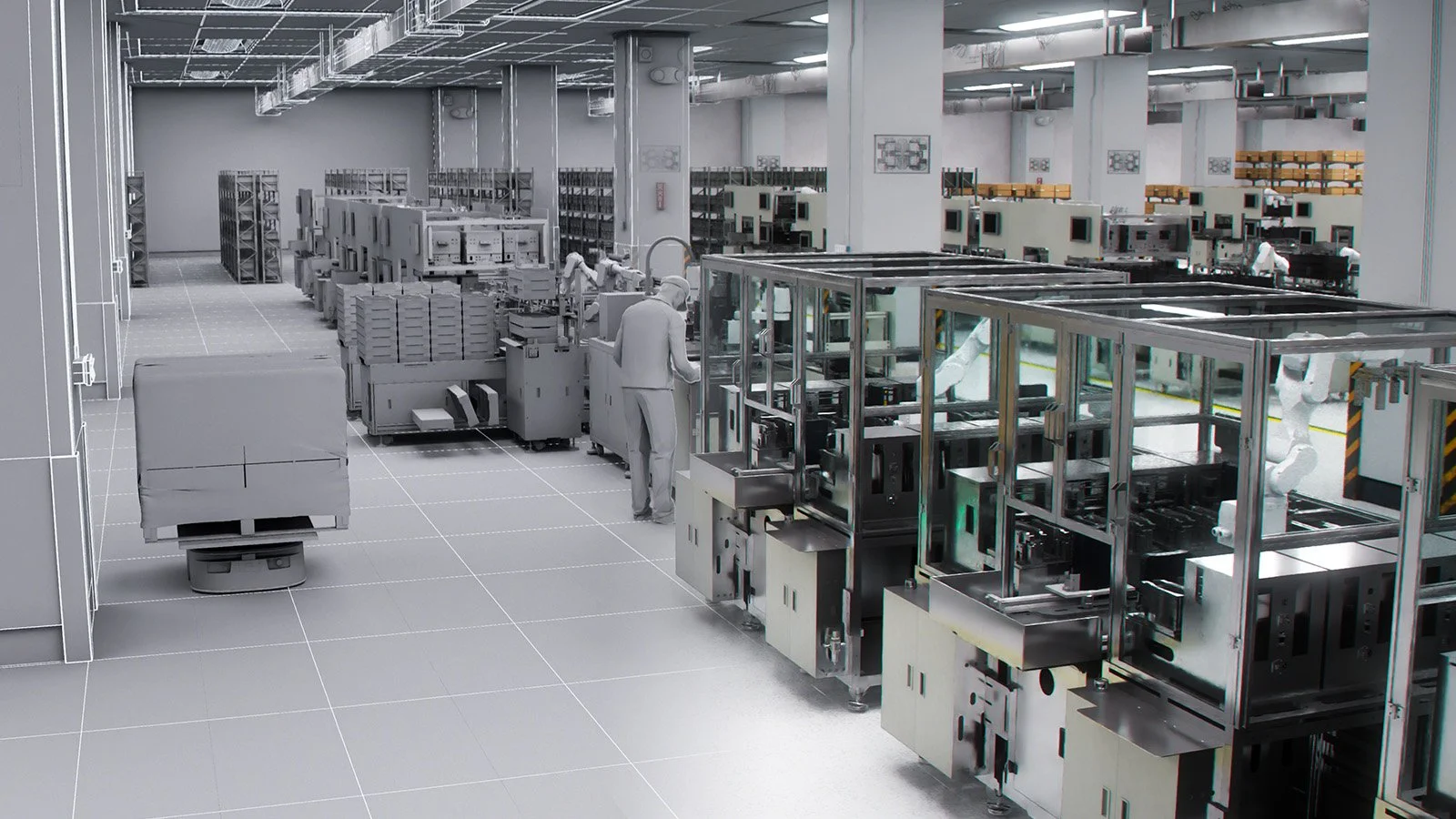 Pegatron's Omniverse-powered quality control system achieving 99.8% defect detection accuracy through physical AI-based video analytics. The electronics manufacturer uses the platform for high-volume production facilities and humanoid robot simulation supporting Blackwell platform manufacturing. [/caption]
Enterprise deployments demonstrate the platform's versatility across industries. In the automotive sector, BMW Group's digital twin factory planning across 31 facilities and Mercedes-Benz's digital-first production approach showcase manufacturing transformation.⁴⁹ Electronics manufacturers like Foxconn use Omniverse for high-volume production facilities and humanoid robot simulation for Blackwell platform manufacturing, while Pegatron achieves 99.8% defect detection accuracy through physical AI-based video analytics.⁵⁰ Consumer goods giants PepsiCo and Unilever optimize operations and marketing, respectively, with Unilever reporting a 50% cost reduction in product imaging.⁵¹
[caption id="" align="alignnone" width="1600"]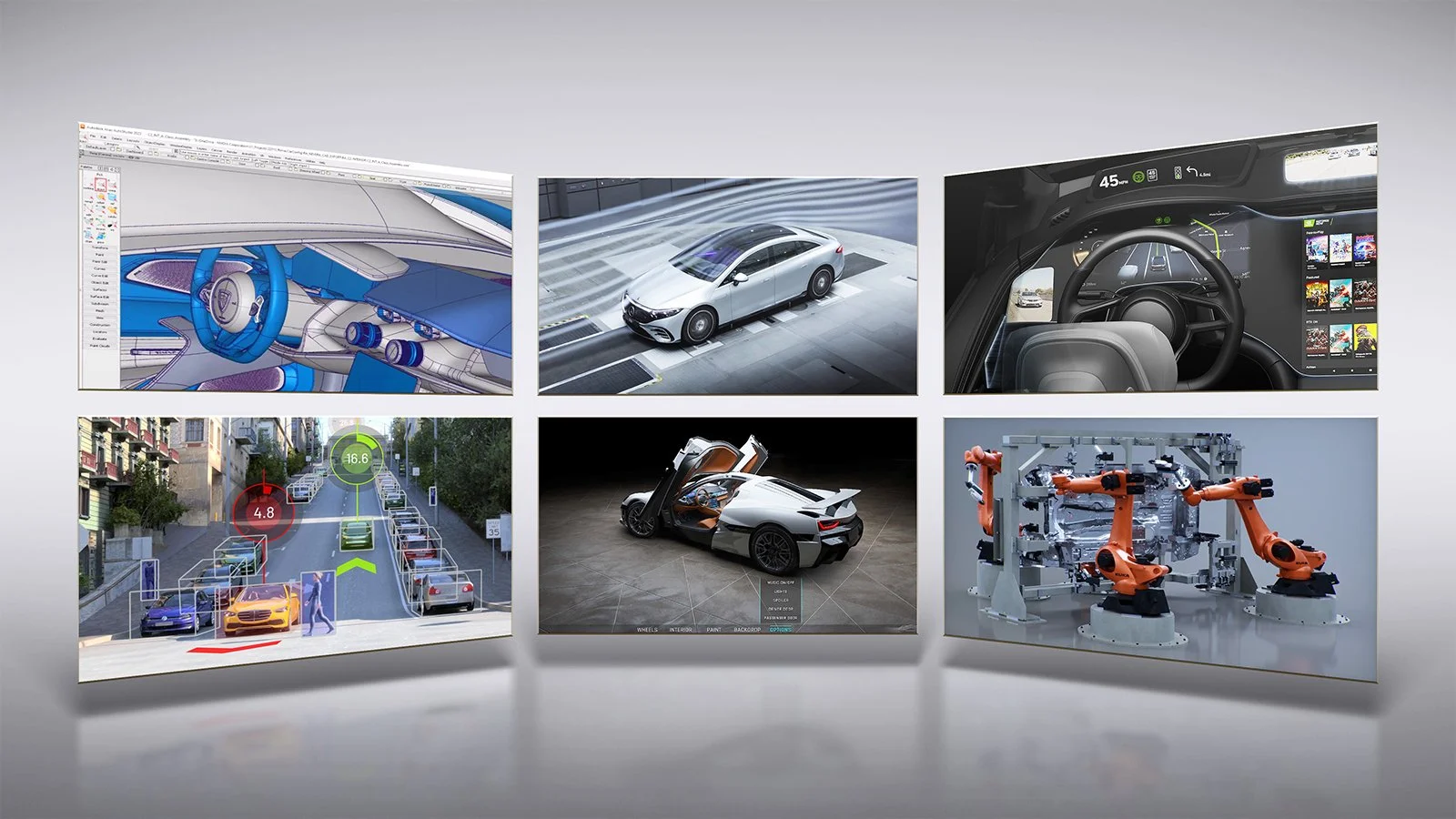 Automotive manufacturers leveraging Omniverse for digital-first production strategies. Mercedes-Benz reports 50% reduction in supplier coordination processes, while Nissan saved $1.1 million in marketing costs with 70% faster content creation through the platform's real-time visualization capabilities. [/caption]
The competitive landscape positions Omniverse uniquely against alternatives. While Unity excels in game development and cross-platform compatibility, developer concerns about per-install pricing models have created market uncertainty.⁵² Unreal Engine offers excellent high-fidelity graphics but takes a 5% revenue share over $1 million. Blender provides an open-source alternative with strong community support but lacks enterprise features.⁵³ Traditional Autodesk platforms focus on CAD/design tools without real-time collaboration capabilities. Omniverse's differentiators include its Universal Scene Description foundation, enabling true interoperability across 50+ 3D formats, real-time RTX rendering with AI-powered features, physical AI integration through NVIDIA Isaac and Cosmos platforms, enterprise-grade collaboration with Nucleus version control, and an extensive connector ecosystem with 82+ third-party applications.⁵⁴
The partnership ecosystem creates significant competitive advantages through major software integrations with Siemens (Teamcenter, NX, Process Simulate), SAP, Schneider Electric, Ansys, Databricks, and Cadence.⁵⁵ Cloud partnerships span Microsoft Azure, AWS, Google Cloud, and Oracle Cloud, while hardware partnerships with Dell, HP, Lenovo, Supermicro, and BOXX Technologies ensure certified deployment options.⁵⁶ This ecosystem strategy, combined with NVIDIA's AI-first approach and deep integration with the company's broader technology stack, creates a substantial competitive moat.
Financial integration within NVIDIA's business model shows Omniverse contributing to the company's $130.5 billion fiscal 2025 revenue, particularly supporting Data Center revenue of $35.6 billion in Q4 2025 and Automotive segment revenue of $1.7 billion for the full year.⁵⁷ While NVIDIA doesn't break out specific Omniverse revenue, the platform's strategic importance as the "operating system for physical AI" positions it as central to NVIDIA's future growth strategy targeting the $50 trillion industrial digitalization opportunity.⁵⁸
Conclusion
NVIDIA Omniverse has evolved from an ambitious collaboration platform into the de facto operating system for physical AI and industrial digitalization, achieving measurable enterprise adoption with over 300,000 downloads and quantifiable ROI across manufacturing, automotive, robotics, and media industries. The platform's technical sophistication—combining modular microservices architecture, OpenUSD interoperability, RTX rendering, physics simulation, and AI integration—enables unprecedented capabilities for digital twin creation, real-time collaboration, and synthetic data generation at an industrial scale. With major enterprises reporting efficiency gains of 30-70% and cost savings in the millions, plus strategic positioning for the $50 trillion physical AI opportunity, Omniverse represents both a current enterprise solution and the foundational platform for the next decade of industrial transformation.⁵⁹ As the October 2025 platform transition approaches, shifting from desktop launcher to cloud-native APIs, organizations must evaluate their digital transformation strategies with Omniverse increasingly becoming not just an option but an essential infrastructure for competing in the AI-driven industrial future.⁶⁰
For companies like Introl, which specializes in deploying large-scale GPU infrastructure for global coverage, the expansion of Omniverse represents significant opportunities. As enterprises build out their digital twin capabilities and AI-powered simulations, the demand for sophisticated GPU deployments, high-bandwidth networking, and specialized cooling solutions continues to accelerate. Introl's expertise in managing deployments of up to 100,000 GPUs positions the company to support the infrastructure requirements of Omniverse implementations across Asia-Pacific's rapidly growing industrial digitalization market.
References
6sense. "NVIDIA Omniverse - Market Share, Competitor Insights in Artificial Intelligence." Accessed August 5, 2025. https://6sense.com/tech/artificial-intelligence/nvidia-omniverse-market-share.
Aircada. "How Does Nvidia Omniverse Stack Up Against Unreal Engine?" Aircada Blog. Accessed August 5, 2025. https://aircada.com/blog/nvidia-omniverse-vs-unreal-engine.
CG Channel. "Check out NVIDIA's Omniverse announcements from GTC 2024." March 2024. https://www.cgchannel.com/2024/03/check-out-nvidias-omniverse-announcements-from-gtc-2024/.
GlobeNewswire. "NVIDIA Launches Cosmos World Foundation Model Platform to Accelerate Physical AI Development." January 7, 2025. https://www.globenewswire.com/news-release/2025/01/07/3005070/0/en/NVIDIA-Launches-Cosmos-World-Foundation-Model-Platform-to-Accelerate-Physical-AI-Development.html.
ISM. "Nvidia Contribution to the Metaverse Case Study." Accessed August 5, 2025. https://ismguide.com/nvidia-xr-metaverse-case-study/.
LinkedIn. "The Shifting Landscape of Industrial Simulation: Unity, Unreal Engine, and Omniverse." Accessed August 5, 2025. https://www.linkedin.com/pulse/shifting-landscape-industrial-simulation-unity-unreal-thomas-strigl.
Marvik. "Exploring NVIDIA Omniverse and Isaac Sim." November 26, 2024. https://blog.marvik.ai/2024/11/26/exploring-nvidia-omniverse-and-isaac-sim/.
NVIDIA. "Case Study - Automotive Marketing with Real-Time Application Built on NVIDIA Omniverse." Accessed August 5, 2025. https://www.nvidia.com/en-us/case-studies/katana-studio-streamlines-automotive-marketing-with-real-time-application/.
———. "Case Study - Paving the Future of Factories with NVIDIA Omniverse." Accessed August 5, 2025. https://www.nvidia.com/en-us/customer-stories/paving-the-future-of-factories-with-nvidia-omniverse-enterprise/.
———. "NVIDIA Cosmos: World Foundation Models Powering Physical AI." Accessed August 5, 2025. https://www.nvidia.com/en-us/ai/cosmos/.
———. "Omniverse Enterprise." Accessed August 5, 2025. https://www.nvidia.com/en-us/omniverse/enterprise/.
———. "Omniverse Platform for OpenUSD." Accessed August 5, 2025. https://www.nvidia.com/en-us/omniverse/.
———. "Platform Overview — Omniverse Developer Overview." Accessed August 5, 2025. https://docs.omniverse.nvidia.com/dev-overview/latest/platform-overview.html.
———. "Product Licenses — Omniverse Enterprise." Accessed August 5, 2025. https://docs.omniverse.nvidia.com/enterprise/latest/common/product-licenses.html.
———. "RTX - Real-Time mode — Omniverse Materials and Rendering." Accessed August 5, 2025. https://docs-prod.omniverse.nvidia.com/materials-and-rendering/latest/rtx-renderer_rt.html.
———. "Technical Requirements — Omniverse Developer Guide." Accessed August 5, 2025. https://docs.omniverse.nvidia.com/dev-guide/latest/common/technical-requirements.html.
———. "Technical Requirements — Omniverse Enterprise." Accessed August 5, 2025. https://docs.omniverse.nvidia.com/enterprise/latest/common/technical-requirements.html.
———. "The Ultimate AI Experience in the Cloud | NVIDIA DGX Cloud." Accessed August 5, 2025. https://www.nvidia.com/en-us/omniverse/cloud/.
———. "What Is a Digital Twin? | NVIDIA Glossary." Accessed August 5, 2025. https://www.nvidia.com/en-us/omniverse/solutions/digital-twins/.
NVIDIA Blog. "GTC 2025 – Announcements and Live Updates." March 2025. https://blogs.nvidia.com/blog/nvidia-keynote-at-gtc-2025-ai-news-live-updates/.
———. "Industrial Ecosystem Adopts Mega NVIDIA Omniverse Blueprint to Train Physical AI in Digital Twins." Accessed August 5, 2025. https://blogs.nvidia.com/blog/mega-omniverse-blueprint-industrial-digital-twins/.
———. "NVIDIA Expands Isaac Software Access and Jetson Platform Availability, Accelerating Robotics From Cloud to Edge." Accessed August 5, 2025. https://blogs.nvidia.com/blog/isaac-jetson-robotics/.
———. "NVIDIA Makes Cosmos World Foundation Models Openly Available to Physical AI Developer Community." Accessed August 5, 2025. https://blogs.nvidia.com/blog/cosmos-world-foundation-models/.
———. "NVIDIA Unveils 'Mega' Omniverse Blueprint for Building Industrial Robot Fleet Digital Twins." Accessed August 5, 2025. https://blogs.nvidia.com/blog/mega-omniverse-blueprint/.
———. "Virtually Incredible: Mercedes-Benz Prepares Its Digital Production System for Next-Gen Platform With NVIDIA Omniverse, MB.OS and Generative AI." Accessed August 5, 2025. https://blogs.nvidia.com/blog/mercedes-benz-ev-nvidia-omniverse-generative-ai/.
NVIDIA Corporation. "NVIDIA Omniverse Physical AI Operating System Expands to More Industries and Partners." January 2025. https://investor.nvidia.com/news/press-release-details/2025/NVIDIA-Omniverse-Physical-AI-Operating-System-Expands-to-More-Industries-and-Partners/default.aspx.
NVIDIA Developer. "Develop on NVIDIA Omniverse Platform." Accessed August 5, 2025. https://developer.nvidia.com/omniverse.
———. "NVIDIA Omniverse: What Developers Need to Know About Migration Away From Launcher." Accessed August 5, 2025. https://developer.nvidia.com/blog/nvidia-omniverse-what-developers-need-to-know-about-migration-away-from-launcher.
———. "Simplify End-to-End Autonomous Vehicle Development with New NVIDIA Cosmos World Foundation Models." Accessed August 5, 2025. https://developer.nvidia.com/blog/simplify-end-to-end-autonomous-vehicle-development-with-new-nvidia-cosmos-world-foundation-models/.
NVIDIA Newsroom. "NVIDIA Announces Major Release of Cosmos World Foundation Models and Physical AI Data Tools." Accessed August 5, 2025. https://nvidianews.nvidia.com/news/nvidia-announces-major-release-of-cosmos-world-foundation-models-and-physical-ai-data-tools.
———. "NVIDIA Expands Omniverse With Generative Physical AI." January 2025. https://nvidianews.nvidia.com/news/nvidia-expands-omniverse-with-generative-physical-ai.
———. "NVIDIA Launches Cosmos World Foundation Model Platform to Accelerate Physical AI Development." January 2025. https://nvidianews.nvidia.com/news/nvidia-launches-cosmos-world-foundation-model-platform-to-accelerate-physical-ai-development.
———. "NVIDIA Omniverse Physical AI Operating System Expands to More Industries and Partners." January 2025. https://nvidianews.nvidia.com/news/nvidia-omniverse-physical-ai-operating-system-expands-to-more-industries-and-partners.
———. "NVIDIA Releases Major Omniverse Upgrade With Generative AI and OpenUSD." August 2024. https://nvidianews.nvidia.com/news/nvidia-releases-major-omniverse-upgrade-with-generative-ai-and-openusd.
ProX PC. "System Hardware Requirements for NVIDIA Omniverse in 2025." Accessed August 5, 2025. https://www.proxpc.com/blogs/system-hardware-requirements-for-nvidia-omniverse-in-2025.
Robotics 24/7. "CES 2025: NVIDIA launches Cosmos world foundation model, expands Omniverse." January 2025. https://www.robotics247.com/article/ces_2025_nvidia_launches_cosmos_world_foundation_model_expands_omniverse.
TechCrunch. "At CES 2025, Uber teams up with Nvidia to scale autonomous driving faster." January 7, 2025. https://techcrunch.com/2025/01/07/at-ces-2025-uber-teams-up-with-nvidia-to-scale-autonomous-driving-faster/.
TechRadar. "Nvidia GTC 2025 - all the news you might have missed." March 2025. https://www.techradar.com/pro/live/nvidia-gtc-2025-all-the-news-and-updates-from-jensen-huang-keynote-as-it-happens.
The Robot Report. "AWS offers accelerated robotics simulation with NVIDIA." Accessed August 5, 2025. https://www.therobotreport.com/aws-offers-accelerated-robotics-simulation-nvidia/.
VentureBeat. "Nvidia expands Omniverse ecosystem as downloads hit 300K." Accessed August 5, 2025. https://venturebeat.com/metaverse/nvidia-expands-omniverse-ecosystem-as-downloads-hit-300k/.
Wccftech. "NVIDIA Dominates AIB GPU Market With 92% Share In Q1 2025, AMD Drops To 8% & Intel To 0%." Accessed August 5, 2025. https://wccftech.com/nvidia-dominates-aib-gpu-market-share-in-q1-2025-amd-intel-drop/.