
December 2025 Update: Lambda H100 at $2.99/hr with zero egress fees. Paperspace H100 at $5.95/hr dedicated. Vast.ai marketplace offering A100s near $1.27/hr with variable reliability. 100+ neoclouds pricing GPUs 30-85% cheaper than hyperscalers. AWS cut H100 pricing 44% (June 2025) compressing market to $2-4/hr. Free egress now standard, eliminating 20-40% cost factor.
Lambda Labs offers H100 GPUs at $2.99 per hour with zero data transfer fees, potentially saving significant costs compared to providers that charge for egress.1 Paperspace prices H100 dedicated VMs at $5.95 per hour with on-demand A100 instances at $3.09 per hour, though advertised $1.15 per hour A100 pricing requires 36-month commitments.2 Vast.ai's marketplace model delivers consumer RTX cards at pennies per minute and A100s near $1.27 per hour, with the tradeoff of variable reliability depending on individual hosts.3
The GPU cloud market has fragmented into distinct tiers serving different use cases. Hyperscalers hold 63% of the market but face aggressive competition from over 100 "neoclouds" pricing GPUs 30-85% cheaper.15 These alternative providers—Lambda Labs, Paperspace, Vast.ai, RunPod, and CoreWeave among them—carve niches through aggressive pricing, specialized hardware, or developer-friendly platforms.
The shift accelerated after AWS cut H100 pricing 44% in June 2025, compressing market rates to $2-4/hr for H100s versus $6-12/hr on hyperscalers.16 Free egress has become standard among neoclouds, eliminating a cost factor that added 20-40% to monthly bills for data-intensive workloads. Understanding provider characteristics helps organizations select appropriate partners for their specific requirements and risk tolerance.
Provider profiles
Each provider occupies a distinct position in the market with different strengths and tradeoffs.
Lambda Labs
Lambda Labs delivers excellent value through zero data transfer fees and competitive hourly rates.1 The provider focuses on AI/ML workloads with purpose-built infrastructure and software stacks. Lambda's positioning targets organizations seeking production-grade infrastructure without hyperscaler complexity.
Lambda offers 8×H100 SXM clusters at $2.99/GPU-hr ($23.92/hr for full node), single H100 80GB at $3.29/hr, A100 80GB at $1.79/hr, and A100 40GB at $1.29/hr.4 The company now offers B200 GPUs at $4.99/hr, delivering 2× the VRAM and FLOPS of H100 for up to 3× faster training.17 Committed pricing reduces H100 costs to $1.85/hr for organizations with predictable demand.
Lambda Key Specs: - Production clusters: 16 to 2,000+ GPUs - Storage: $0.20/GB/month with zero egress - Billing: Per-minute with no minimums - ML stack: PyTorch, CUDA, frameworks pre-installed - Interconnect: NVLink on 8× GPU nodes
Lambda frequently experiences capacity shortages, especially for popular GPU types, though H100 availability improved in late 2025.5 Organizations requiring guaranteed availability should consider reservations or alternative providers as backup.
Paperspace (DigitalOcean)
DigitalOcean's acquisition of Paperspace brought additional stability and ecosystem integration.6 The platform feels more like a consumer app than enterprise infrastructure, with seamless Jupyter integration and pre-installed environments. Paperspace targets developers and small teams valuing ease of use.
Paperspace Pricing Reality: | GPU | Advertised | Actual On-Demand | Commitment Required | |-----|------------|------------------|---------------------| | H100 80GB | $2.24/hr | $5.95/hr | 3-year for advertised | | A100 80GB | $1.15/hr | $3.09/hr | 36-month for $1.15 | | Growth Plan | - | $39/month | Required for premium GPUs |
Paperspace operates three datacenter regions (NY2, CA1, AMS1) with per-second billing and zero ingress/egress fees.18 The Gradient platform provides notebooks, deployments, workflows, and managed ML infrastructure.
Note: Paperspace's GPU pricing has not changed since 2023 due to the DigitalOcean acquisition, making it less competitive than providers who adjusted to 2025 market rates.19 Organizations should compare effective costs carefully.
Vast.ai
Vast.ai operates like Airbnb for GPUs—individual owners rent hardware through a competitive marketplace.6 Hosts range from hobbyists to Tier-4 datacenters, creating pricing often 50-70% cheaper than hyperscalers. The model produces the lowest absolute prices in the market.
Vast.ai Instance Types: | Type | Description | Price vs. On-Demand | |------|-------------|---------------------| | On-demand | Fixed pricing, guaranteed resources | Baseline | | Reserved | Pre-payment commitment | Up to 50% discount | | Interruptible | Lowest cost, may be paused | 50%+ cheaper |
Vast.ai offers RTX 4090 from $0.50/hr, H100 from $1.77/hr, A100 80GB around $1.27/hr, and consumer RTX 3090s as low as $0.16/hr.320 Higher reliability scores correlate with higher prices—datacenter A100/H100 hosts provide more predictable throughput.
Reliability varies by host, requiring checkpoint planning and migration capability.5 Vast.ai excels for experimentation, research, and training runs that checkpoint frequently. Production inference should consider more reliable alternatives.
RunPod (Added Comparison)
RunPod offers container-based, serverless GPU computing with H100 80GB from $1.99/hr (community cloud) to $2.39/hr (secure cloud).21 The platform charges nothing for data ingress or egress, with per-second billing and no volume minimums.
RunPod provides AI-specific templates, one-click deployments, and broader GPU availability than Lambda. The community cloud operates similarly to Vast.ai's marketplace but with more consistent infrastructure. Secure cloud instances run in certified datacenters for compliance-sensitive workloads.
CoreWeave (Enterprise Comparison)
CoreWeave targets enterprise deployments with premium infrastructure. The company went public in 2025 with over 250,000 NVIDIA GPUs across 32 datacenters.22 H100 pricing runs $4.75-6.16/hr on-demand, with reserved capacity discounts up to 60%.
CoreWeave differentiates through InfiniBand networking and NVIDIA GPUDirect RDMA for efficient distributed training at scale. The infrastructure suits large multi-GPU clusters requiring high-bandwidth, low-latency interconnects. Direct sales discussions and volume commitments unlock competitive pricing.
Pricing analysis
Pricing comparison requires understanding not just hourly rates but total cost including commitments, fees, and hidden charges.
Comprehensive rate comparison (December 2025)
| GPU | Lambda | Paperspace | Vast.ai | RunPod | CoreWeave | AWS |
|---|---|---|---|---|---|---|
| H100 80GB SXM | $2.99/hr | $5.95/hr | $1.77-4.69/hr | $1.99-2.39/hr | $4.75-6.16/hr | $3.90/hr |
| A100 80GB | $1.79/hr | $3.09/hr | ~$1.27/hr | ~$1.89/hr | $2.21/hr | $4.10/hr |
| A100 40GB | $1.29/hr | N/A | ~$0.90/hr | ~$1.19/hr | N/A | $3.67/hr |
| RTX 4090 | N/A | $0.76/hr | $0.40-0.50/hr | ~$0.44/hr | N/A | N/A |
| B200 | $4.99/hr | N/A | Limited | N/A | N/A | N/A |
Market context: Median H100 on-demand price across providers is $2.99/hr. Reserved instances offer 30-40% discounts. Industry projections suggest H100 may fall below $2/hr universally by mid-2026.23
Lambda's zero egress fees and RunPod's free data transfer provide value not reflected in hourly rates for data-intensive workloads.
Commitment requirements
Lambda offers committed pricing reducing H100 costs substantially for organizations with predictable demand. The commitment structure suits production workloads with steady utilization. Spot and on-demand pricing accommodate variable workloads.
Paperspace's multi-year commitments lock organizations into pricing that may become uncompetitive as the market evolves. Organizations should carefully evaluate whether commitment duration matches their planning horizon. Shorter commitments or on-demand pricing preserve flexibility.
Vast.ai operates on purely on-demand pricing without commitment requirements. The flexibility suits experimentation and variable workloads. Organizations with steady demand may find better economics through committed pricing elsewhere.
Hidden costs
Data transfer fees significantly impact total cost for workloads moving substantial data. Lambda's zero egress policy eliminates this variable. Other providers charge $0.08-0.12 per GB for egress, which compounds quickly for large model weights or training datasets.
Subscription fees add to effective hourly rates for providers requiring paid tiers. Paperspace's Growth plan at $39 per month affects economics for light users. Heavy users amortize subscription costs across many GPU-hours.
Spot and preemptible instance interruption creates hidden costs through lost work. Checkpointing overhead, restart time, and occasional complete restarts affect effective throughput. Reliable instances may cost more per hour but less per completed workload.
Capability comparison
Beyond pricing, providers differ in available hardware, software ecosystem, and operational capabilities.
GPU availability
Lambda focuses on data center GPUs including A100 and H100 variants. The focus ensures consistent, production-grade hardware across instances. Consumer GPUs are not available, limiting options for cost-sensitive experimentation.
Paperspace offers both data center and consumer GPUs, from RTX 4090 through A100 and H100. The range enables matching hardware to workload requirements and budgets. Consumer GPUs suit inference and small training runs while data center GPUs handle larger workloads.
Vast.ai's marketplace includes the widest hardware variety, from consumer RTX cards through data center GPUs. The variety enables finding precisely matched hardware. Quality and performance vary by host, requiring evaluation of individual offerings.
Software and tooling
Lambda provides pre-configured ML environments with popular frameworks and tools. The environments reduce setup time and ensure consistent configurations. Custom environments are also supported for specialized requirements.
Paperspace's Gradient platform provides managed ML infrastructure with notebook serving, experiment tracking, and deployment pipelines. The platform approach suits teams wanting managed MLOps without building infrastructure. Standalone VMs are available for teams preferring custom setups.
Vast.ai provides basic VM access with user-supplied software stacks. The minimal platform requires more self-sufficiency but provides maximum flexibility. Template images and user documentation partially address the setup burden.
Multi-GPU and clustering
Lambda supports multi-GPU instances and cross-instance clusters for distributed training. High-bandwidth interconnects between GPUs enable efficient scaling. The capability suits large model training requiring multiple accelerators.
Paperspace offers multi-GPU instances but limited cluster capabilities. Single-node multi-GPU training works well. Distributed training across instances requires more manual configuration.
Vast.ai's distributed hosts lack coordinated networking for efficient multi-host training. Single-host multi-GPU configurations work when available. Organizations requiring clusters should look elsewhere.
Use case alignment
Different providers align with different use cases based on their characteristics.
Development and experimentation
Vast.ai's low prices make it ideal for experimentation where GPU cost sensitivity outweighs reliability requirements. Developers can try ideas cheaply before investing in production infrastructure. The marketplace model provides access to diverse hardware for compatibility testing.
Paperspace's user-friendly platform suits developers new to GPU computing. The low friction onboarding enables rapid prototyping. Managed notebooks reduce infrastructure overhead for small teams.
Production inference
Lambda's combination of competitive pricing, reliability, and zero egress fees suits production inference serving. Consistent hardware and software stacks simplify deployment. SLA-backed availability protects production workloads.
Hyperscalers remain dominant for production inference requiring integration with broader cloud services. Organizations with existing cloud infrastructure may prefer consistent providers despite premium pricing.
Large-scale training
Lambda and hyperscalers provide the multi-GPU and cluster capabilities large-scale training requires. High-bandwidth interconnects and coordinated scheduling enable efficient distributed training. Alternative providers generally lack these capabilities at scale.
Reserved capacity through commitment pricing makes economic sense for sustained training workloads. Organizations training large models regularly should negotiate committed pricing with capable providers.
Operational considerations
Provider selection involves operational factors beyond pricing and capabilities.
Support and SLAs
Lambda provides enterprise support options with defined response times and escalation paths. Support quality affects operational experience, especially during incidents. Enterprise agreements should include support terms.
Paperspace benefits from DigitalOcean's support infrastructure. The acquisition brought improved reliability and support compared to standalone startup operations. Enterprise customers access priority support.
Vast.ai's marketplace model provides limited platform support. Issues with individual hosts require host-level resolution. The model suits self-sufficient operators comfortable troubleshooting independently.
Security and compliance
Lambda operates its own infrastructure with defined security practices. Organizations with compliance requirements should evaluate Lambda's security posture against their needs. SOC 2 and similar certifications may be available.
Paperspace and DigitalOcean provide documented security practices and compliance certifications. The cloud provider model enables standardized security controls. Enterprise agreements address specific compliance requirements.
Vast.ai's distributed model complicates security assessment. Individual hosts have varying security practices. Organizations with strict security requirements should carefully evaluate marketplace suitability.
Hybrid strategies
Organizations can combine providers to optimize for different use cases. Vast.ai for experimentation, Lambda or RunPod for production inference, and CoreWeave for large-scale training creates a portfolio approach. The complexity requires management but optimizes economics and hedges against capacity constraints.
Decision framework: provider selection by use case
Quick Selection Guide:
| If Your Priority Is... | Choose | Rationale |
|---|---|---|
| Lowest absolute cost | Vast.ai interruptible | $0.16-1.77/hr, checkpointing required |
| Best H100 value + reliability | Lambda Labs or RunPod | $1.99-2.99/hr, zero egress, production-grade |
| Easiest onboarding | Paperspace Gradient | Consumer-friendly UI, managed notebooks |
| Enterprise compliance | CoreWeave | SOC 2, InfiniBand, enterprise SLAs |
| Large distributed training | Lambda or CoreWeave | Multi-GPU clusters, NVLink/InfiniBand |
| Budget experimentation | Vast.ai or RunPod community | Variable reliability acceptable |
Workload-Specific Recommendations:
| Workload | Recommended Provider(s) | Why |
|---|---|---|
| Model prototyping (<$100/mo) | Vast.ai, RunPod community | Lowest cost for iterative work |
| Fine-tuning (single GPU) | Lambda, RunPod secure | Reliable, competitive pricing |
| Production inference | Lambda, CoreWeave | SLAs, zero egress, consistent performance |
| Large-scale training (8+ GPUs) | Lambda, CoreWeave | NVLink clusters, high bandwidth interconnects |
| Compliance-sensitive workloads | CoreWeave, RunPod secure | Certified datacenters, enterprise agreements |
| Data-intensive pipelines | Lambda, RunPod | Zero egress fees critical |
Total Cost Calculation:
TCO = (GPU hours × hourly rate) + (egress GB × egress rate) + (storage GB × storage rate) + subscription fees + downtime cost
Example: 1,000 H100-hours with 500GB egress - Lambda: (1,000 × $2.99) + (500 × $0) = $2,990 - AWS: (1,000 × $3.90) + (500 × $0.09) = $3,945 (32% more) - CoreWeave: (1,000 × $4.75) + (500 × $0.05) = $4,775 (60% more)
Key takeaways
For cost-sensitive teams: - RunPod and Lambda offer H100 at $1.99-2.99/hr vs $3.90-6.98/hr on hyperscalers (50-70% savings) - Vast.ai interruptible instances provide additional 50%+ savings for checkpoint-tolerant workloads - Free egress (Lambda, RunPod) adds 20-40% savings for data-intensive pipelines - Paperspace advertised pricing requires 36-month commitments—calculate true costs
For production deployments: - Lambda and RunPod secure cloud provide production-grade reliability with competitive pricing - CoreWeave offers enterprise SLAs and InfiniBand for compliance-sensitive, large-scale training - Avoid Vast.ai for inference serving—variable reliability impacts user experience - Multi-provider strategies hedge against capacity constraints and optimize by workload type
For strategic planning: - GPU cloud pricing compressed 30-50% in 2025; expect continued decline through 2026 - H100 may reach sub-$2/hr universally by mid-2026 as supply increases - Neoclouds captured significant market share (100+ providers) competing with hyperscalers - Free egress and per-second billing now industry standard among alternatives - Annual provider review captures market improvements and new entrants
Professional guidance
GPU cloud provider selection involves balancing cost, reliability, compliance, and operational requirements across evolving market conditions.
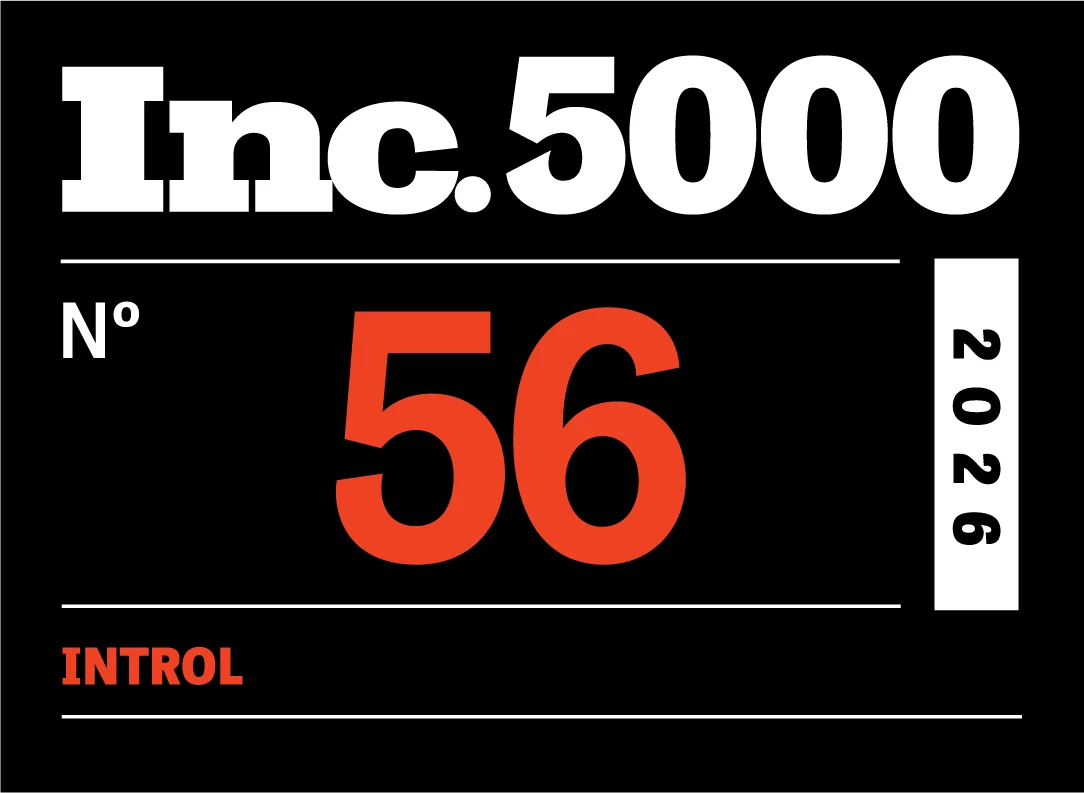
Introl's network of 550 field engineers support organizations navigating GPU cloud provider selection and multi-cloud integration strategies.7 The company ranked #14 on the 2025 Inc. 5000 with 9,594% three-year growth, reflecting demand for professional infrastructure services.8
Multi-provider strategies across 257 global locations require consistent operational practices.9 Introl manages deployments reaching 100,000 GPUs with over 40,000 miles of fiber optic network infrastructure, providing operational scale for hybrid cloud-on-premises strategies.10
References
-
Northflank. "7 cheapest cloud GPU providers in 2025." 2025. https://northflank.com/blog/cheapest-cloud-gpu-providers ↩↩
-
Thunder Compute. "Best Paperspace Alternatives (September 2025): Real Prices and Contracts." 2025. https://www.thundercompute.com/blog/paperspace-alternative-budget-cloud-gpus-for-ai-in-2025 ↩
-
IntuitionLabs. "H100 Rental Prices: A Cloud Cost Comparison (Nov 2025)." November 2025. https://intuitionlabs.ai/articles/h100-rental-prices-cloud-comparison ↩↩
-
RunPod. "8 Best Lambda Labs Alternatives That Have GPUs in Stock (2025 Guide)." 2025. https://www.runpod.io/articles/alternatives/lambda-labs ↩
-
Pool Compute. "Lambda vs. Vast.ai: Comprehensive Comparison of Cloud GPU Providers." 2025. https://www.poolcompute.com/compare/lambda-vs-vast-ai ↩↩
-
Hyperstack. "Top 5 Cloud GPU Rental Platforms: Features and Pricing Guide." 2025. https://www.hyperstack.cloud/blog/case-study/cloud-gpu-rental-platforms ↩↩
-
Introl. "Company Overview." Introl. 2025. https://introl.com ↩
-
Inc. "Inc. 5000 2025." Inc. Magazine. 2025. ↩
-
Introl. "Coverage Area." Introl. 2025. https://introl.com/coverage-area ↩
-
Introl. "Company Overview." 2025. ↩
-
Paperspace. "An alternative to Lambda Labs for high-performance GPU." 2025. https://www.paperspace.com/cloud-providers/lambda-labs-alternative-gpu-cloud ↩
-
RunPod. "The 8 Best Paperspace Alternatives That'll Actually Save You Money in 2025." 2025. https://www.runpod.io/articles/alternatives/paperspace ↩
-
Explained Post. "Top 10 Lambda Labs Alternatives for GPU Cloud in 2025." September 2025. https://www.explainedpost.com/2025/09/lambda-labs-alternatives.html ↩
-
Hyperstack. "10 Best Cloud GPU Providers for 2026." 2025. https://www.hyperstack.cloud/blog/case-study/top-cloud-gpu-providers ↩
-
McKinsey. "Neoclouds' challenges and next moves." 2025. https://www.mckinsey.com/capabilities/tech-and-ai/our-insights/the-evolution-of-neoclouds-and-their-next-moves ↩
-
Saturn Cloud. "GPU Cloud Comparison: 17 Neoclouds for AI in 2025." 2025. https://saturncloud.io/blog/gpu-cloud-comparison-neoclouds-2025/ ↩
-
Lambda. "AI Cloud Pricing." 2025. https://lambda.ai/pricing ↩
-
DigitalOcean. "Paperspace Pricing." 2025. https://docs.digitalocean.com/products/paperspace/machines/details/pricing/ ↩
-
Thunder Compute. "Best Paperspace Alternatives (December 2025)." 2025. https://www.thundercompute.com/blog/paperspace-alternative-budget-cloud-gpus-for-ai-in-2025 ↩
-
DigitalOcean. "10 Vast.ai Alternatives for GPU Cloud Computing in 2025." 2025. https://www.digitalocean.com/resources/articles/vastai-alternatives ↩
-
RunPod. "Pricing." 2025. https://www.runpod.io/pricing ↩
-
Thunder Compute. "Runpod vs. CoreWeave: Who is better and cheaper?" 2025. https://www.thundercompute.com/blog/runpod-vs-coreweave-vs-thunder-compute ↩
-
IntuitionLabs. "H100 Rental Prices: A Cloud Cost Comparison (Nov 2025)." 2025. https://intuitionlabs.ai/articles/h100-rental-prices-cloud-comparison ↩